I’ve got a Job!

Against all odds, I’ve got a job.

I have applied for work six times in the last few years, and been knocked back five. This is a little galling, as they were all volunteer jobs. Being rejected once as a volunteer is discouraging, twice perplexing, thrice infuriating, the fourth time mystifying, the fifth – well I pretty well talked myself out of the fifth job in a conversation with my potential boss, perhaps avoiding the pain I could feel coming my way. But perseverance prevails, and I have a job! Not a glamorous job, but I like it. Are you ready?…

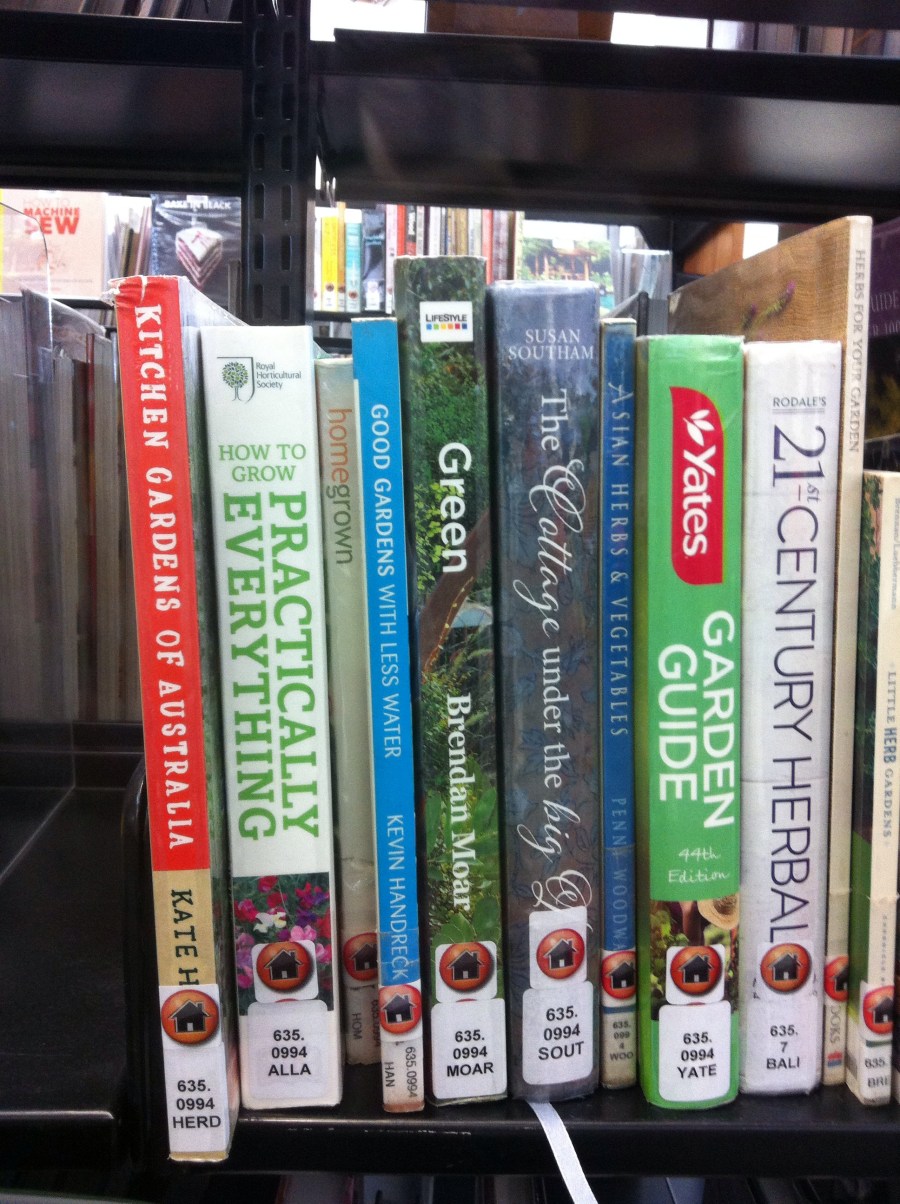
My job, for two or three hours each Friday, is to shelve returned books at our local library. I was in the library late last year and watched a librarian at work putting books back in their proper spots on the shelves and thought, ‘I could do that!’. I interrupted the librarian from her task, and asked if there was a role for a volunteer. Thankfully she was not intimidated by all my apparatus, the ‘rolling show’, as others had been. I applied through the local council’s volunteer department, organised a Police Check, and, having admitted to my several shortcomings in the application form, wrote a letter explaining how I could do the job. I detailed my long acquaintance with the Dewey Decimal system; the easy access I have on Public Transport; the quietness of my Smart Drive wheelchair motor that would not wake sleeping patrons; the portability of my ventilator; and the gorilla-like length of my arms with which I can easily reach the top shelf without standing up. (I didn’t really say that bit). I rather think that my long record of volunteer-rejection fuelled my letter!
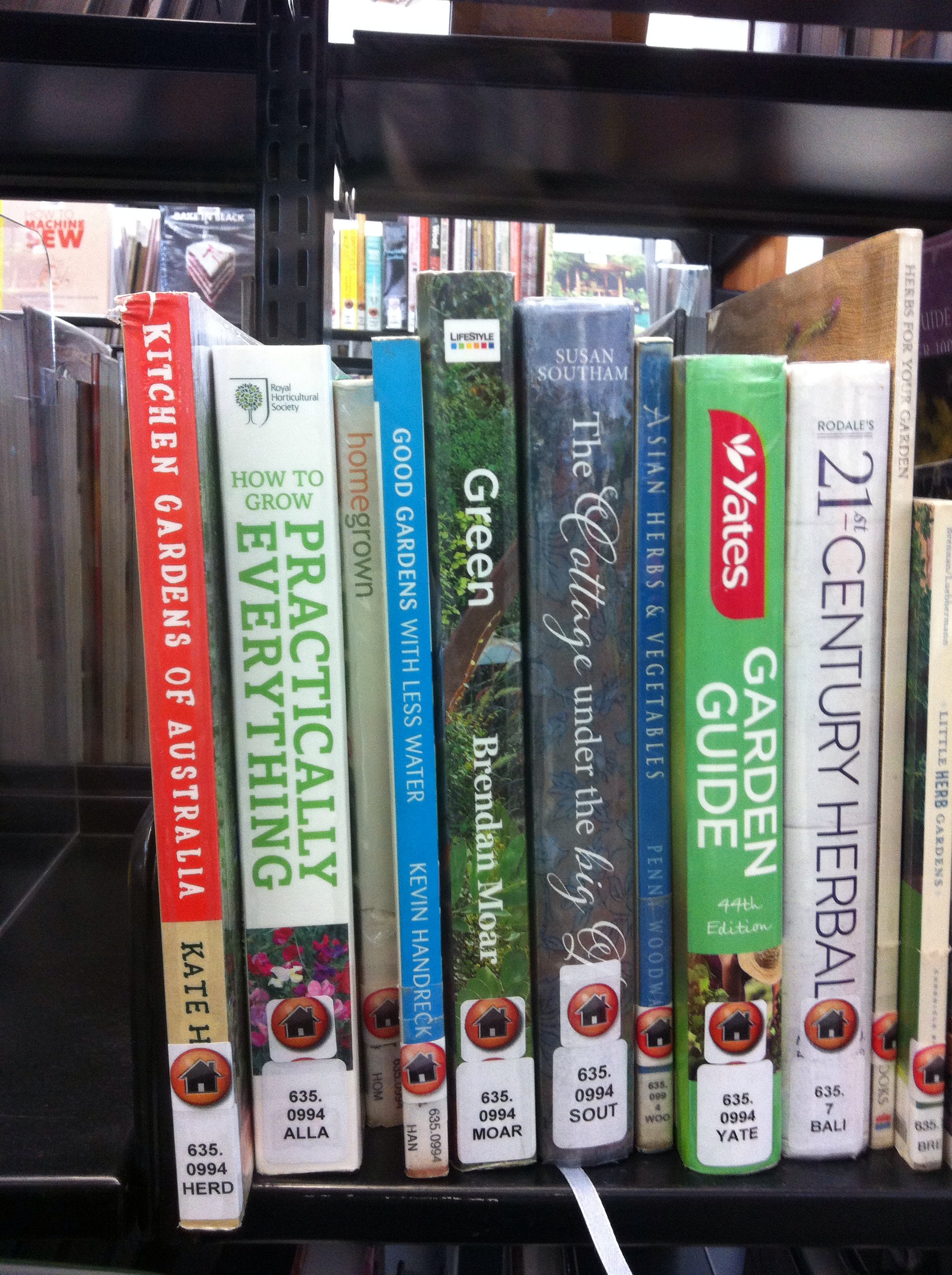
But, there was no reply. November, December, Christmas, New Year, January, home from holidays … still nothing.

January has been my prime month for applying for jobs for the last few years. This annual phenomenon is a clear response to our January holiday. Each year I come home so energised by being away that I am compelled to look for a new project. One January I saw a Lawn Bowls Wheelchair on eBay, and impulsively put in a bid. I was sure this was the Big One, the bright path to nirvana. While I waited for the auction to close I went to the Bowling Club and met some of the experts in white. Mercifully as the gloss began to fade from this vision splendid somebody else put in a higher bid, and so I was saved from a life of drinking beer, in white.

It must have been January buoyancy that eventually gave me courage for a follow up email to the volunteer department. But nothing followed, not even a courteous reply: “Thank you Mr Allen, but…   ah…   well…   no thanks”.

February eased past, then March, and the call came! “Mr Allen, we’d love you to come down.” It’s a great job, my job. The Library is a hive of activity, and there are numerous keen and interesting staff. My gorilla arms are superlative. The only downside to my job is that it reminds me of the job I really wanted. Three of my six applications were for the same job, in three separate years. I wanted, more than anything, to be a hospital chaplain. I had been a chaplain for a couple of years in another town and it was one of the most fulfilling roles I have ever filled. The most fascinating aspect of chaplaincy was a seat on the hospital’s Medical Ethics Advisory Board, a panel of lawyers, doctors, administrators, a university lecturer in ethics, and community representatives that provided the Director of Clinical Governance with advice on thorny problems. We discussed how much it was appropriate to spend on specific, anonymous patients in the light of other needs and budgetary constraints; and once considered the therapeutic use of Thalidomide in our hospital. But the wonderful part of chaplaincy was listening to people talk through difficult times in their lives, acknowledging all they felt, and sometimes having something to offer that lifted their gaze. It was a beautiful job, and sometimes a sad one. As well as services in the Chapel, there were occasional funerals to conduct; once of a much admired member of staff in her thirties who had suddenly fallen down on duty, an aneurysm that ended her life within a month. She lost her speech, but her life seemed transformed by a visit from a retired Bishop who gave her a handmade wooden cross that she rarely let go. The most difficult task I have ever faced was to help a family turn off life support for their father in the very early hours of a winter morning; it was my role to nod to a doctor while I led the family in prayer.

All of that happened in the life I used to live as a fit and healthy, ordinary pastor in a country town. Our world changed completely in 2009 after a Motor Neurone Disease diagnosis, and after some time I felt I had something to offer as a hospital visitor; I now understood deeply the fears and hopes that I had heard so many patients express; and I dearly wanted to sit beside beds again, and listen.  But three years in a row the hospital said no. The first time because I was too late for the volunteer induction course that they only ran once a year (the course I regularly helped present in the previous hospital!); and the subsequent two years because my wheelchair was considered a hazard in the wards. I must admit, I still feel angry about it, sorrowful; it seems to me an entirely unfair and futile decision. Without pride, I still feel I would have been good in that role, and it is painful revisiting it now.

But, I’ve got a job. At last! The need to contribute something, somewhere, is strong. I am very mindful of the privilege of living in a country with a disability pension, much though I hate being a pensioner. And there are all sorts of other ways the community offers generous support. Putting a few books away hardly repays that debt; but it’s something. It’s odd really, how much pleasure there is in doing something. I delight in catching the ‘bus to work’; and the satisfaction of coming home again properly worn out by a couple of trolleys of shelving is no less than the happy exhaustion I once felt after a big day digging fence posts on the farm, or pouring concrete when I was a tradesman.

I’ve got a job!

Rejoice!


Please note: the web address of Rejoice! has changed. Please visit      
www.rejoice.live

As always, I’d love to hear from you.

Go back

Your message has been sent

Warning
Warning
Warning

Warning.


Oboe Sequel

Oh, Oh, Oboe, written several months ago, was not the end of my adventure in the woodwinds.
Indeed, the sequel is a too-good-to-be-true story.

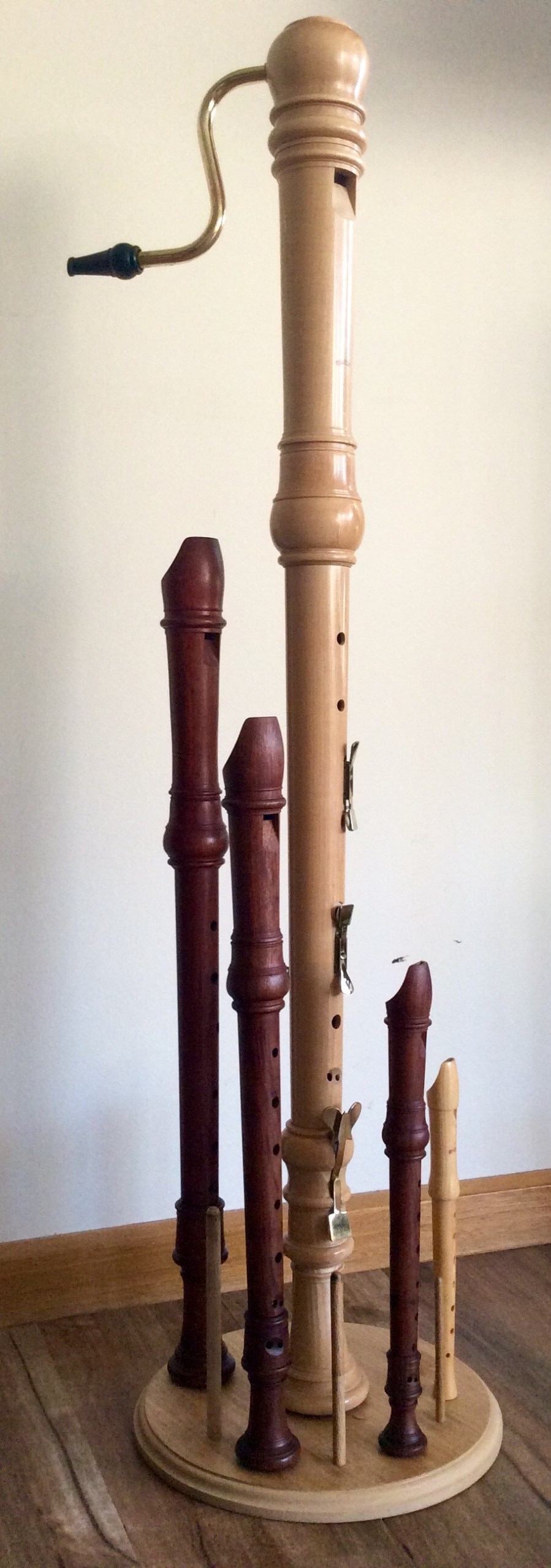
Once the Oboe, beloved friend, had gone to a high school orchestra (incidentally, the young oboist’s father contacted me to say he was doing very well) I turned back to the Baroque Recorder. This grand phrase, ‘Baroque Recorder’, is the way my woodwind teacher likes to distinguish what we play from the School Recorder, words which cause some folk to relive traumatic experiences amongst a gaggle of screeching plastic weapons. With the proceeds from the Oboe I ordered a good instrument from Germany which duly arrived but didn’t live up to my expectations, so back it went to the fatherland. A few weeks later I happened to look on Gumtree quite late one night, just to keep an eye out for woodwind instruments that occasionally pop up. My eyes almost popped out.

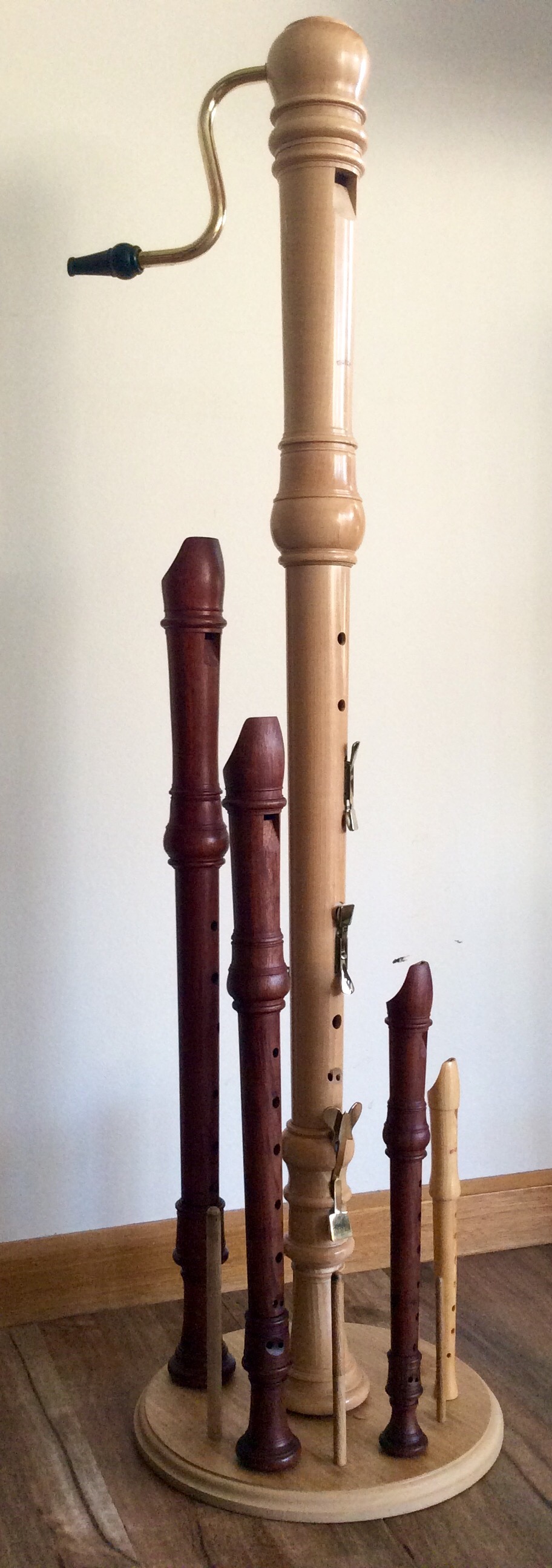
Someone in Western Australia was selling a complete set of five recorders: Sopranino, Descant, Treble, Tenor and Bass. Not just any recorders, but Rottenburgh recorders by the German maker Moeck. If you were a recorder aficionado you might emit a low whistle. The asking price was well within the proceeds of an almost new Oboe. It was such a startlingly impossible opportunity that I felt paralysed by an irrational certainty that they must surely already be under offer, or just plain SOLD.  Was it actually worth making even the slightest emotional commitment to these instruments by enquiring? Or should I just save myself the pain, and keep looking. I sent an email right then, very late at night, and tried to sleep.  In vain.

8am, no reply to my email.
9am, still nothing.
10am absolutely nothing.
It being almost a reasonable hour to ring someone in WA, I called the mobile number to find, wonderfully, ecstatically, that they were still for sale, and had been for 9 days without any interest at all. The owner was from a rural musical family, and was “cleaning out some cupboards”!

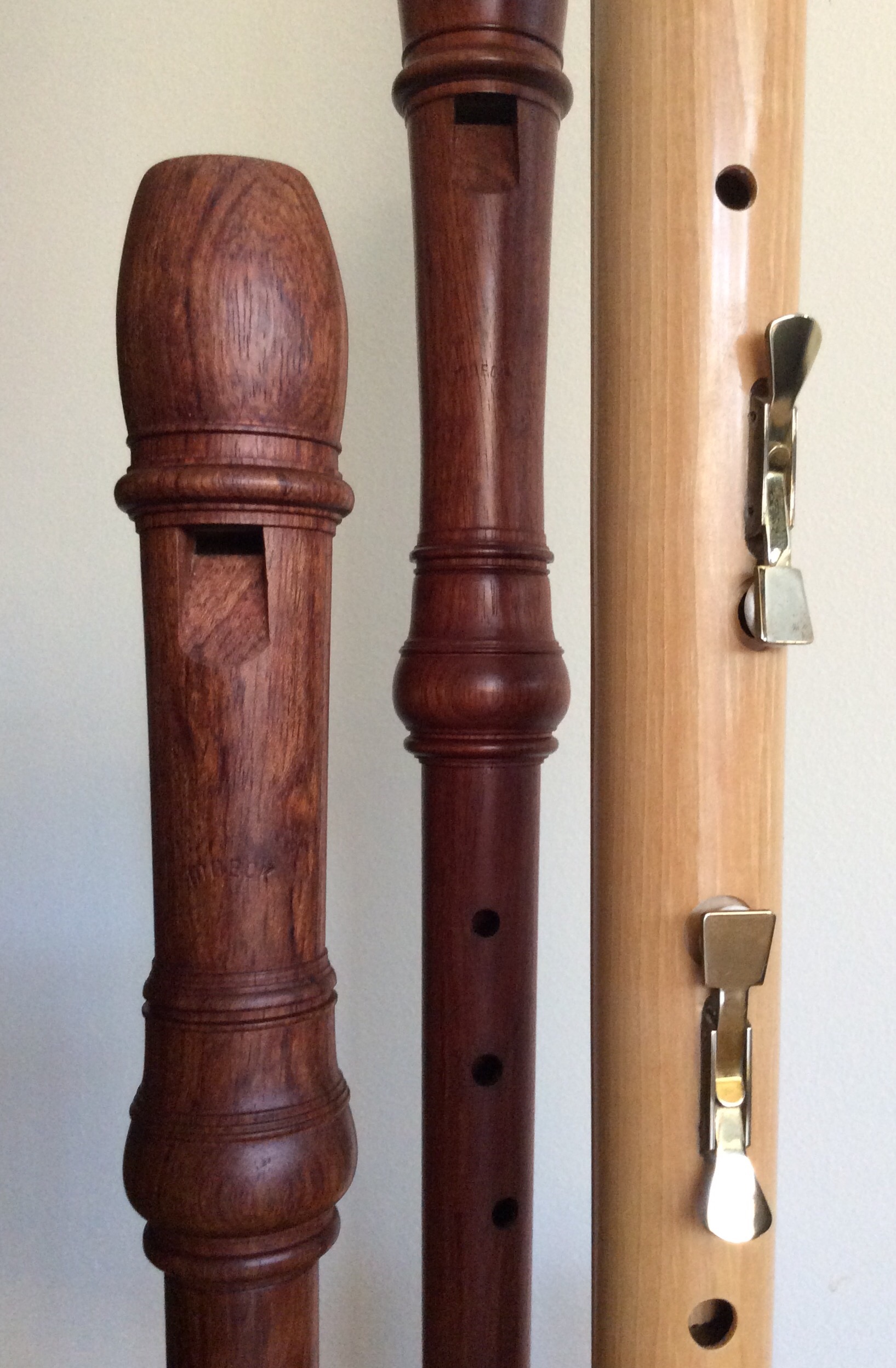
These are they, glorious Moeck Rottenburgh recorders.
Playing these is sheer joy!

Eighteen months have passed since I began recorder lessons; I hate to think how much time I’ve spent going up and down scales and over and over and over tricky passages. So many, many hours! My style of learning throughout life has been plain old slow; and to get a passage firmly under my fingers I seem to need dozens of repetitions.  But it seems to work, and I’ve played in several small concerts now, usually rather poorly due to ridiculous levels of nervous tension. I’m very privileged with teachers; last year I was being taught by the director of the conservatorium, and this year I am with another teacher who is something of a specialist in Baroque music and the bass recorder, which is my main instrument.  For half an hour before my lesson both these teachers and I play trios together, which I really don’t understand because I’m nowhere near their standard.  But it’s fantastic fun! There is even talk of a concert item.

It wouldn’t be a proper edition of Rejoice! if I didn’t engage in a little introspection (which must annoy some of my readers endlessly) so here it is: Amidst the great excitement and satisfaction that music brings, I sometimes think all of it is a monstrous waste of time. This is the comment of my Inner Protestant, who has a serious work ethic to uphold. I’ve been a slave to this all my life: every moment should count in some significant way that benefits all of humanity. It’s a vain and foolish paradigm, but deeply embedded for some reason.  At another level I’m sure that the rigorous breath control required does me a world of good; so much so that I suspect that it actually keeps me going. At yet another level, I aspire to something lofty.

I have this hope that creative beauty might be more than an end in itself. While this may simply be my Inner Protestant having another go, trying to rationalise and subvert pleasure, adding merit to delight, I can sometimes play a transcendent note. Synesthetes, they say, see shades of colour when they hear musical notes. I catch a whiff of heaven.  The human world is so endlessly ugly in its daily grind, in the lies of its politics, in its posturing and its poverty; so very ugly that I find myself pressed down by it all very often. So I look for the beautiful, and listen for it, and try to play it. When the sublime rushes through me, I hope that it is pure in some ultimate sense, and that it proves that life is ascendant. I want to discover over and again that life is divine.

Rejoice!


Please note: the web address of Rejoice! has changed, visit      www.rejoice.live

As always, I’d love to hear from you.

Go back

Your message has been sent

Warning
Warning
Warning

Warning.

The Story of The Pool

This is the story of The Pool,
sequel to last week’s Oh, Oh, Oboe.

Late in winter of 2014 I made my first Land Voyage to Maroochydoore, to visit my daughter’s family, and returned home to a wonderful project we had dreamed up: building a proper Cubby House our grandchildren could play in whenever they visited. It would be tall enough for grandparents, and big enough to roll out a double swag. This was a thrilling prospect: I do love a project! I remember the keen anticipation I felt on the train heading south from Queensland as I rehearsed each step of the plan.

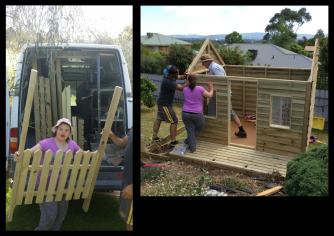
imageWe have a very good handyman who we call in for the big jobs now and then, and he came and dug footings and poured concrete for six treated pine poles, on top of which he placed a large timber platform that I had screwed together on the garage floor.
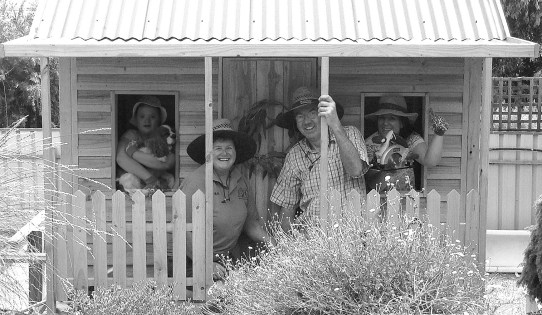
Then I had help from a couple of good mates who stood up the various panels of a sturdy, treated pine cubby made for us by a local man – who also happens to have a child at our school. All I had to do then was drill in a fair number of screws, hang a door, roof the veranda, brace the frame, a bit of this and that, and the job was done.  Marvellous!

IMG_0893-004 B&W use
(Show-offs, aren’t we?)

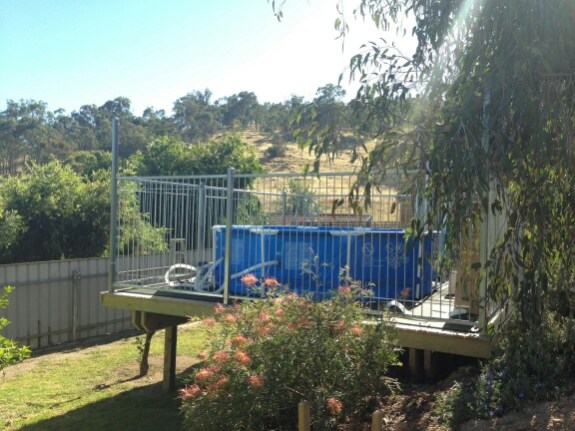
A few weeks after that highly successful project I was travelling on the bus to town and had a flash of transformative vision. I suddenly saw how we could use the very same process to build the swimming pool that my Favourite Wife had been longing for ever since we arrived in Paradise.  In three of our former homes we had built our own pool, generally an above ground pool that we sunk well into the earth and abutted with generous decking. But this home was on sloping ground; I was not even vaguely capable of the physical work I had previously undertaken; and the cost of a professionally installed pool was going to be monstrous. In my momentary vision I saw that all we needed was another set of treated poles supporting another platform. This one would be more like an oversized tank stand, with deep beams and joists, decking which would be properly fenced around, all supporting a modest ten foot circular pool.

I had a few minutes spare that day, and went straight from the bus stop to the council building across the road, where I drew a sketch of my vision for a building inspector. He had no objections, as long as I submitted a proposal with proper drawings and specifications for formal approval. From the council I went directly to the bank, and they we happy to join in too! It was seven weeks before Christmas.

Within three weeks I had researched the spans and timber sizes to support 6 tonnes of water (that number was a surprise!), submitted drawings, obtained required consent from one neighbour, gained formal approval from the council and from the bank, ordered a big sling of treated timber and a ten foot swimming pool, and developed a severe case of the dithers on the way. Should I do this? Could I actually do this? It seemed, more often than not, preposterous. Was this the most fantastic venture which the family would revel in for years to come, or was it blind stupidity that would begin and never end, send us broke, and ruin our best bit of garden with a half-built timber “thing”? Quite literally I was sleepless with self doubt through many nights. But one month before Christmas we began!

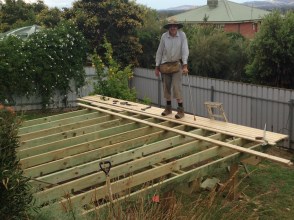
We set out our site with string lines and our handyman came back with an offside and a laser level, and nine stout posts were set 600mm deep in concrete. My good mate from the cubby-standing day came back, and together we lifted up the 12 inch deep treated timber bearers that I had cut and notched, ready to carry the joists. imageOne of my daughters was at my side every weekend, and whenever she could after work. She would pass me things, lift things, hold things, run and get things; she was brilliant. Much of the time I could stand in one spot and get a good deal done, sit for a moment, then stand in another spot. The big old Power Chair “B4” was called back into service to travel from the house to the building site, all of 30 feet, where I had several pairs of crutches scattered about. I brought the breathing ventilator on site with linked up air hoses to extend my personal ‘battery life’. Day by day the pool deck grew and grew and grew, and finally at 12 noon on Christmas Eve the council inspector came. It was his last appointment on the very last working day for the year, and having measured all the critical lengths he pronounced our pool complete and fit for use.

On Christmas Day, 2014, we swam!

Now we swim in the pool every day when the mercury climbs. Favourite Wife is a happy wife, Teen Girl has always been a mermaid, and our small grandchildren feel quite at home in our 3 foot deep, wet and cool wonder.

image
Swimmers have a cool view of blue sky and glorious gum trees.

That’s the story of our Pool, and more than a year later it still takes my breath away: I did that!  I can’t believe it sometimes. And – get this – having done that, there was nothing I could not do! Nothing in all the world!
Crikey, I could even learn to play the oboe.

The Pool: a winner.
The Oboe: not so much, but no regrets whatever.


Rejoice!


I don’t love the comments section found under blogs and on facebook and twitter and practically everything on the web. While it is called ‘the conversation’, to me it doesn’t seem like a conversation whatsoever. But I do enjoy hearing from those who are so kind as to read my writing.

Go back

Your message has been sent

Warning
Warning
Warning

Warning.


Oh, Oh, Oboe

For 52 weeks I have left readers with the happy thought of me tootling away on the oboe. You might recall Oboe 004, or Oboe 050. But now the truth must out: that has not been the case at all.

Having purchased my oboe in January last year, on our family vacation, I began 2015 with music lessons in Boroque Recorder and Oboe on alternate weeks. The practice regime was rigorous, with both instruments requiring their daily dose of scales, arpeggios and pieces to prepare for the next lesson. A dozen or so scales and lively passages of Vivaldi for the recorder; and a Cmaj scale plus the calm beauty of a Sati Gymnopedae for the oboe.  Progress on the oboe was slow indeed, but I was creeping forward.

Oboe, Music and Life
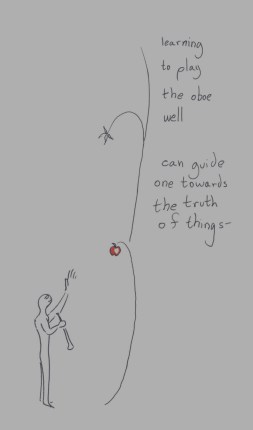
from Illustrated Lessons of Oboe, Music and Life – Oshri Hakak

To play the Oboe had been a great dream, truly a lifelong dream. It is the most beautiful sound in the world; a haunting oboe solo on the radio will always stop me in my tracks. When I was still driving I would occasionally have to pull over to the side of the road just to listen.  I had previously played clarinet and flute, taken a few lessons, but mostly just jammed along in church bands by ear. This, however, was turning out to be something very different indeed!

A great friend of mine is a musician par excellence, and when I told him that I had purchased an oboe he looked at me in disbelief.  “But you do know, don’t you”, he said, “that the Oboe is an ill wind that nobody blows good”.

The Oboe requires a ridiculous amount of pressure to support the reed.  To create a note you have to hold the reed very firmly in an embouchure that sets your jaw muscles alight after about 3 minutes, and then blow through a tiny tube about a quarter the diameter of a drinking straw. After half an hour of practice (which technically, I admit, may never have actually happened …) I found I could barely speak. This was doing me no good.

Total surrender was inevitable before the summer was ended, and with a heavy heart I put the Oboe up for sale. It was purchased by a School Orchestra, which was a satisfying home to send it to. Having awoken to the cold, hard light of day I then had to look in the mirror and ask myself without flinching: What in the world had possessed a passable middle aged recorder player to take on the most demanding wind instrument in the orchestra?

The answer, when it dawned on me, was simply this: The Pool.

and The Story of The Pool I shall tell next week…..

Rejoice!

Go back

Your message has been sent

Warning
Warning
Warning

Warning.

Wheely Horrible

When my wonderful wheel wouldn’t went it was wheely horrible.  Wheely, wheely horrible.

My new SmartDrive power assist wheel was still every bit as fabulous and thrilling as it was when it arrived three weeks ago, right up until the moment I left the wristband controller on while getting into our pool. After that, it wasn’t very fabulous at all. The drive unit is water-resistant, drives in rain and through puddles; but the controller … not.

We disconnected the battery; laid it in the sun; put it in a bag of rice; but all the tricks were to no avail. A day later it was all but dead: emitting a feeble, sickly green glow in place of the strikingly bright blue and red LEDs it ordinarily displays. And controlling nothing.

I rang the supplier on Monday morning and discovered they were to close within the hour until the New Year, but thankfully they were able to quickly get a replacement in the mail. When I saw how many hundreds of dollars were involved in that very brief swim, I was also thankful that I had previously discussed wheelchairs with our home insurer.

It was all wheely, wheely horrible, but, I am ashamed to admit, I was wheely horrible too.

I hate, absolutely hate, being pushed in a wheelchair. It is nothing more than pride I’m sure, but gosh, do I hate it! And being without my wonderful wheel meant … can you guess? … being pushed now and then. Later the same day my kind and devoted Favourite Wife wanted to push me from the vehicle up the closest ramp onto the footpath in town. Instead I immediately took off in a huff in completely the opposite direction, in public, with many witnesses, and with a prodigious display of offended, impatient grumpiness. I must now confess that I had no idea where a ramp was to be found in this alternate direction, but I ploughed on over some tree roots and gravel and forced my way up a vaguely sloped section of gutter  with much grunting and puffing. It was a mantrum, a terrible display of infantile behaviour, all because I wouldn’t be pushed. I was wheely horrible to my Favourite Wife. I once saw an elderly man who was using a pair of crutches in a Melbourne concert hall do something very similar, and I was astounded by the rudeness he showed his partner in public!

But I understand a little more these days. I went in one splash from delightfully mobile with my miracle wheel to comparative immobility. I’m amazed at how integral that little wheel has become in just a few weeks, and how debilitating it was to suddenly loose it. Little things added up constantly: not being able to duck back down the hall for some small thing I forgot. Not being able to carry a cup or plate in one hand while rolling from one room to another. Not being able to balance a tray of freshly prepared afternoon tea on my knees to take outside for my Favourite Wife. Not being able to scoot along the front path to check a watering hose. Not being able to join the family inside the shopping mall. Not being able to manage the gradient of the church car park without help. I could go on, and on, and on.  Technology is so wonderful, and loosing it is painful beyond imagination! I can honestly say those few days were the lowest point of 2015, and the point at which I felt most profoundly disabled. It’s a bad feeling.

I had hoped that on reaching the end of this essay I would have discovered something philosophical to share about the link between technology and the human spirit, but I haven’t.  Except to say: it’s great when it works.

And it’s great how consistently it works too: wonderful, liberating, reliable technology.

It was GREAT when the new wristband arrived, just 3 days and 19 hours after the dunk.


Rejoice!


As always, I’d love to hear from you.
Go back

Your message has been sent

Warning
Warning
Warning

Warning.


Wheely Thrilling

On Friday I took only five wheels to town, rather than the usual eight.

This began with the longest downhill, freewheeling roll I have ever made: from our front door to the bus stop. Only about 300 metres, and not overly steep, but braking is only possible with gloved hands on the wheelchair push rims. What a thrill!

Having safely arrived at the bus stop I felt deliciously irresponsible. Dropping from eight wheels to five meant no Chug, no tool kit, no backup power supply, no spare ventilator, no spare mask, spare air hose or spare everything else that I habitually take everywhere. No plan B! The feeling was both intoxicating and intimidating; a feeling so intense that it took the whole ten minutes waiting for the bus to figure out quite what it was all about. Travelling so light is really quite exciting; thrilling in an almost childish way. After two years of only leaving home with loads of equipment, my “rolling show”, this new sense of heavily pared back mobility is quite hard to describe. The closest analogy I can think of is that it felt like flying! But the big, consuming question occupying my thoughts at the bus stop was simply this: will it work, will this go well, is there an uncomplicated, happy ending to this bus trip? I find the element of risk very invigorating; and in my little world, this definitely felt risky.

As the bus appeared at the bottom corner of the park, so did an increase of apprehension and thrill: how would the next stage go? Would my five wheels make it smoothly from the footpath, up the ramp, around and down the aisle of the bus? Or would it get all confusing with driver and even passengers getting involved in one of those awkward public rescues. (It’s quite possible that you have never been ‘publicly rescued’ – it’s not much fun.)

There was no turning back: I knew that my five wheels were not able to tackle the hill-climb back to Paradise.

Here comes the bus!

            The doors are open…

                        The ramp is down…

Steady, concentrate, eyes on the ramp, and push!

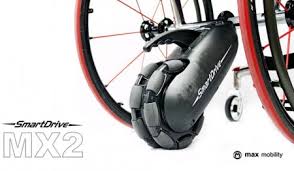
smartdriveThe mystery fifth wheel is a SmartDrive, a fantastic, lithium battery powered device that I ordered a fortnight ago after trialling several power-assist manual wheelchair systems in Melbourne. It really is stunning technology, (stunningly priced), fairly new on the market, and another example of the huge improvements of the last few years that I benefit from every day. With a range of 15km on flat ground, this little wheel pushes harder and faster than you can believe.  It has amazing traction, and exactly copies the speed you set with the chair’s push rims. Steering and braking is also through the push rims, just like normal. A blue tooth connected wrist band with an accelerometer notices when you make a pushing motion and engages the motor immediately, and disengages as soon as you tap your hand on the rim, sending a vibration to the wrist band. It is brilliant inside shops, between shops, round the house, round the block, on grass, on carpet, everywhere. And it’s great fun too; far more engaging and satisfying than a regular power wheelchair. Particularly important is that it is physically demanding enough to avoid the trap of inactivity that I once fell into by relying too much on a power chair.
Play the video on the SmartDrive site: http://www.max-mobility.com/

One more story: A highlight in researching and ordering this device was an appointment with a mobility provider in Melbourne who was also a wheelchair user. The difference between this and previous sessions I have had with occupational therapists and sales people was immense, massive. Firstly, he was sitting in his wheelchair, down at my height.  I cannot remember a therapist or salesperson in a showroom who didn’t remain on their feet, creating an obvious but strangely unaddressed awkwardness. Now that I think about it, I can’t understand why either party allows this to happen, it’s awful. Beyond that, this chap just got it. Everything I tried to express he immediately understood, every problem he knew first hand; and every suggestion he made came from long personal experience.  He told me simple things about my current wheelchair that no other professional had ever suggested: the push wheels needed to be moved forward a couple of inches, the rake on the seat wasn’t quite right. (Since corrected in my garage, and so much better!) I feel exasperated when I think of all the people in the industry I have met over the last five years who must have known that, but didn’t stop to tell me! I spent about three hours there and learned more than I had in all my previous appointments combined. It’s a reminder that there is no substitute for shared experience; we should all roll a mile on another man’s wheels now and then.

About all this I am feeling very pleased, very blessed, very rich!


Rejoice!


Go back

Your message has been sent

Warning
Warning
Warning

Warning.


Bamboo

I am reasonably comfortable speaking to an audience, or was in the past, but playing a musical instrument in front of anyone gives me the heebie jeebies. Well, that’s not strictly true, I was once the leader of a Ukulele Choir that had more than two dozen members. (I like the idea of an instrument that you measure by the dozen – like bread rolls, or fruit!) The Ukulele is such a friendly and forgiving instrument, and we had enormous fun in our choir; a big audience didn’t faze us at all … much. But these days I am playing serious music, because I am a student at the Murray Conservatorium. Initially I made the mistake of thinking that a rural music school claiming to be a Conservatorium was a bit high handed, but I was entirely wrong. There are more than 600 students at ‘The Con’, and the teaching staff are musicians of the highest calibre who perform all over the place. Graduates from here regularly go on to study at the Sydney and Melbourne ‘Cons’ and become professional musicians.  It’s a great place to go every week!  My teacher says we are studying Baroque Recorder, which I think distinguishes us from School Recorder. I imagine that’s the idea, as the humble recorder has a rather hackneyed reputation. It’s a great mistake to undervalue the recorder: the 400 year old Baroque Recorder is an incredible instrument capable of playing the most challenging repertoire from every era. It is chromatic, complex and nuanced. In lessons we play duets by Bach, Vivaldi, Corelli, Telemann and others, and it’s as demanding as anything could be, and beautiful and exhilarating.

Earlier this evening I was playing at the Murray Conservatorium in in front of a small audience, but an audience of considerable talent. The concert was for those who had written a piece of music for performance (which I had!). The opening piece was written and performed by a high school flautist who will doubtless go on to far greater heights. She was accompanied by a young man of the same age, who played a complex piano accompaniment with great panash. Her piece is to be her scholarship audition in a short while, and it was just dazzling*!

Bamboo
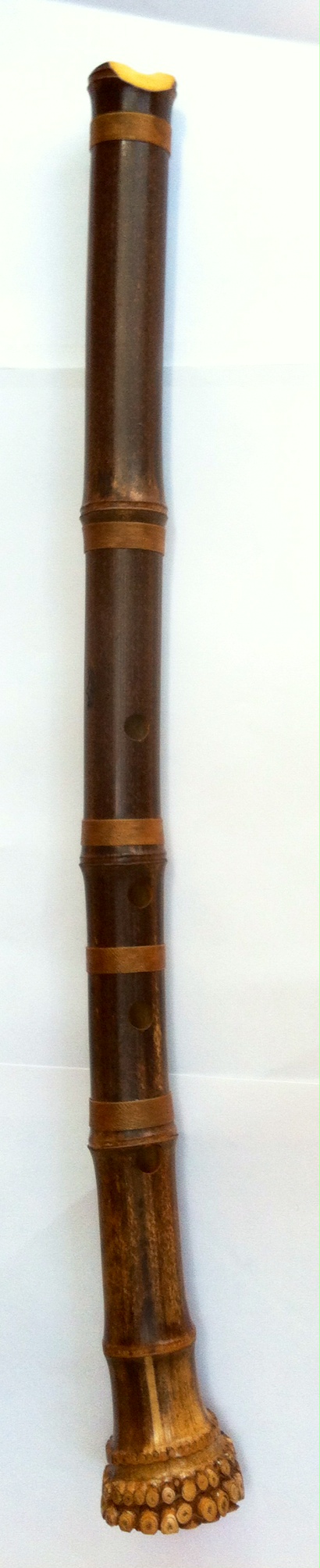
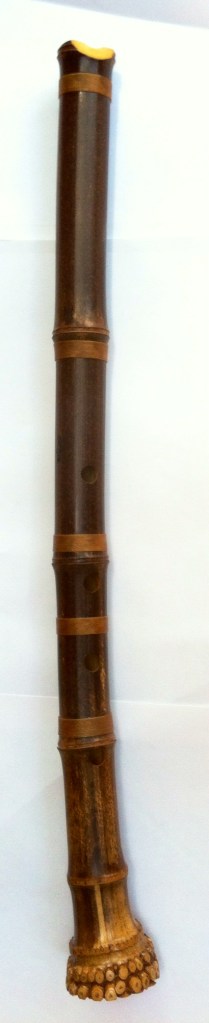
My Shakuhachi (strictly speaking a Hochiku, a sub-species), a real treasure!

My much shorter piece was titled Bamboo, which is good because you don’t really expect bamboo to dazzle, do you? Bamboo can just be its unique and unsymmetrical self, it’s appeal is simplicity; calming and sedate. More earth-honest than all those fancy orchestral instruments! That’s the conclusion I reached while the school students were offering their considerable musical talents.

A few days ago I was practising my piece, Bamboo, on a piece of bamboo. Instead of recorder I had written for Shakuhachi, and end-blown Japanese flute that is literally a couple of feet of bamboo with five holes and an angle cut on the top to create a ‘blowing edge’, known as the urugachi by the shakuhachi literati. While practising I lost concentration as a vision of the upcoming performance crept into my thoughts, and my hands began to shake so much that I had to put the instrument aside for a while before I could play properly!

My Baroque Recorder teacher was my accompanist this evening, playing tenor recorder. He is a terrific musician, in demand as a performer here and overseas, and is actually the head of the conservatorium. I’m very privileged to be studying with him, and to have him as my accompanist for Bamboo. When our turn came we sat down out the front and tuned (not that you can really tune a piece of bamboo …) and I said under my breath, “you know they are looking at us”, which he kindly repeated to everyone in his big, confident, boss-of-the show voice.

I stayed up till midnight tonight to write this all down (after staying up till 2 am last night worrying about performing) because I need to tell someone how ridiculously satisfied and rewarded I feel; how deeply peaceful and purposeful such a moment can be. The performance wasn’t perfect, but neither was it a flop. It was modestly good I reckon, and the seasoned musicians in the audience were genuine and appreciative in their comments.  Gosh, it was a thrill! From the weeks leading up to the concert, refining my simple composition, through to the intense preparation for a single recital. It was an experience that seemed to embrace all of my physical, emotional and spiritual being. And again I feel so very fortunate. I am grateful for a field of endeavour, something delightfully consuming, somewhere to point my own small boat.

Rejoice!

* I wrote this essay on November 11th, and since then we have attended another concert where a composition by the same young student was performed with a full orchestra, herself as flute soloist before returning to the percussion section for the rest of the concert. Quite a talent.

As always, please say hello!

Go back

Your message has been sent

Warning
Warning
Warning

Warning.

Crowd Pleaser

My recent journey retracing last year’s 1580km expedition north by rail to visit my daughter’s family is well and truly complete, but I have a final reflection to share. It’s a sequel to the thoughts in last week’s post I think.

Passing through Sydney twice, it was inevitable that at some point I would end up on a crowded bus. This is can be nerve racking. Most bus drivers have proved to be helpful and kind, but I have met one or two that are tense, cautious … even gruff. At one bus stop on this trip the driver looked at me with something like disbelief and said,

“You want to bring that   (pointing dramatically at The Chug),
“in here?”                         (pointing sceptically at his bus).

Honestly, I don’t blame drivers for their caution. With all my paraphernalia, my “rolling show”, I’m sure I look unlike any other passenger they have seen. And there is another factor: more than half the people I see in wheelchairs on buses also have carers with them. In fact I have never yet seen another person with a manual chair on a bus without a carer, and many have significant, obvious disabilities. So it’s probably quite reasonable for drivers to have legitimate questions about my level of physical and intellectual ability, my communication, or anything at all really.

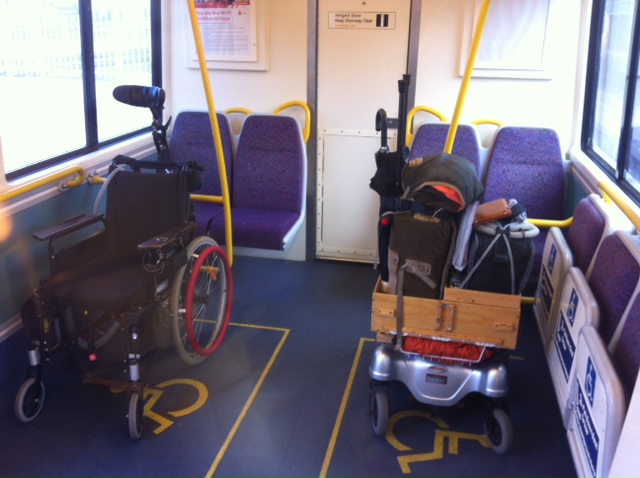
This is Qld, not NSW. And it's a train, not a bus. And we are facing forwards, not backwards. And it's empty, not crowded. But it's the only photo Iv'e got .... you get the general idea.
This is Qld, not NSW. And it’s a train, not a bus. And we are facing forwards, not backwards. And it’s empty, not crowded. And they are on opposite sides of the aisle, not side by side. But it’s the only photo I can find …. you get the general idea.

The Chug is the same width as Bugger, a narrow manual chair, so that side by side they will fit snugly into the smallest two-seat wheelchair space on any bus. Living in the country I have had much practice driving up the ramp and turning into fairly empty buses, uncoupling from The Chug and parking both units neatly and quickly. I generally have myself organised before the driver gets back to the wheel after he lifts the ramp. I can do it quite efficiently now, but the first dozen times were quite daunting, and the second dozen still intimidating. A crowded bus still brings considerable apprehension.

The dread moment arrived in Sydney surely enough: a full looking bus was pulling up, and time pressures did not permit me to wait for another.  The driver was happy and courteous, but even so the multiple challenges of driving onto the bus, putting a ticket through the little machine, squeezing past who or goodness knows what, and finally parking both units, were all waiting ahead. I could hear the driver asking people to move out of the designated spaces behind the front wheel arches, and I heard a couple of the seats being folded up.  It’s amazing how much your brain can process in one moment, and along with fierce concentration on the practical details at hand my thoughts delved into the possible reactions of the people on the bus.  Especially the ones who had been asked to move!  Were they annoyed with me? Would they be looking at their watches wondering if the slight delay would escalate into missed connections in peak hour transit? Were some people questioning my right to take up 4 seats when many were already standing? Were people tut-tutting under their breath, asking themselves (and possibly their bus-neighbours) the very same questions about my level of ability that bus drivers must ponder?

Sydney buses have a peculiar stipulation that I have encountered nowhere else: wheelchairs must be parked backwards (hence the need for 4 spaces on this bus, double the disruption I generally cause in Victoria). There is a bulkhead that you must back up to, which would presumably serve well in the case of a collision. But the result was that as all these anxious thoughts were still whirling around I found myself looking straight into the faces of my imagined antagonists.  Several were barely an arm’s length away! What’s worse, the seating on buses steps up as you progress down the aisle, presumably to accommodate mechanical things going on under the floor. From the perspective of the backwards-facing-wheelchair-spot this creates a veritable amphitheatre of interrogators!

There was nowhere to look except into eyes and faces, most wearing the blank, dispassionate look of the city dweller. They were everywhere! As I was imagining the unspoken ire of the audience I faced, one of the blank faces broadened into a smile.

“Nice driving”, said the smile.

“Good job” came a second.

“You must have practised that”.

And suddenly there were several smiles and nods, and a couple more kind remarks too. Briefly, we were connected.

My mission to spend a couple of days with distant family was quite unknown to my new found friends. They were unaware that it would take 9 days of travelling on public transport to accomplish my goal; they had no idea of the complexity of preparing for the trip with a check-list with over 100 headings; nor had they any sense of the climactic, blissful celebration of life which my grandsons and I enjoyed at the other end. Similarly, I was utterly unaware of the private challenges each of my (smiling!) audience no doubt carried.  And yet …

There was a connection. We were all on the same bus, just for a moment sharing a common destination, forging our way along life’s uncertain path. I don’t think I am reading too much into that moment; I think the warmth I suddenly felt in the face of fear came from a tiny glimpse of human truth, shared by a few, on an ordinary bus: that we are all in this together. One of us might have had a more obvious challenge right then, but the rest well knew that we’ve all got to take our chances, have a go, and hope.

.

Rejoice!

.

Go back

Your message has been sent

Warning
Warning
Warning

Warning.

Saved from a Pickle

After 14 hours on the train from Brisbane to Sydney I very nearly ended up in a pickle.

I ran out of time for an important task on my way through Sydney last week, which was to call in at the Pensione Hotel in George St. to check that there were no steps. I have learned that it’s always best to make contact with a hotel and ask if there any steps: specifically any rise more than 1 inch high. It’s surprising where steps turn up; and surprising also how invisible steps are to people for whom they present no obstacle. Even with my simple 1” rule I can still arrive and find a step hiding somewhere. The most common step is actually the curb; occasionally it is very difficult to find a way from car park to path. Well, I should have emailed the hotel in Sydney, but I didn’t do that either; it was entirely my fault that I had no idea what I would find at day’s end.

And what a surprise it turned out to be!  Two big, convict-laid sandstone steps rising from the footpath to the front door which opened onto a tiny foyer containing a lift and a cedar staircase winding its way upward.  A sign pointed invitingly upward to Reception on the first floor. I always carry with me an excellent pair of German made collapsible carbon fibre crutches, so leaving Bugger and The Chug somewhat exposed on George Street I mounted the sandstone treads, caught the lift, and immediately descended three steps to a wandering corridor that led to Reception. My thoughts were running to the cost of  a new hotel room, the probably forfeiture of this hotel’s deposit, and the problem of just how and where another room might be found in the Sydney CBD at 9pm. I felt somewhat foolish explaining my mistake to a young man behind the counter, but he was charming and enthusiastic, “No Sir, I don’t think this will be a problem, let me go and check”.

He was gone a few minutes and returned with confidence that the room I had booked could be accessed. He then accompanied me back along the wandering corridor, back up three steps, back down in the lift, and back down two sandstone plinths to the footpath, where we found Bugger and The Chug safe and sound on George St.  Then I followed this helpful fellow a few doors further up George St. and into an old arcade, studded with tiny shops.  The arcade narrowed considerably and after squeezing between two columns at the end we turned and passed several tables of diners, then on round a couple of bends to our goal: another lift!  The building, my guide told me, was very old and had once been a post office. The lift itself was the oddest shape, as was the room when I eventually found it.

The tiniest room in the world: single bed, Bugger and The Chug, and only half of me.
Just enough room for a single bed, Bugger and The Chug, and half of me.

To reach my allocated room we went through two large fire escape doors and along a couple more winding corridors that changed width considerably and occasionally dodged old sandstone cornices and columns. Destination: the tiniest hotel room in the world!  But everything was fresh and new, it had an en-suite, and it was definitely the best sleep of the trip.

The kindness people show me is continually reassuring. If I stop somewhere to read a map or to figure out a timetable it is quite likely that someone will stop beside me and ask if I need any help. The Chug attracts comment virtually every time I leave home; many people say enthusiastic, encouraging things to me. Entertainingly, people frequently offer to help me get it on the bus ( … how are they planning to help … actually?), or offer to help me push it along! I can’t imagine how they think I am pushing it, but the function of The Chug – which is to pull me along – seems elusive to many. It is quite amusing when people finally figure out how it works. Their faces light up, and they say, “Oh, now I get it!”

In a world gone mad, a world that seems ever more impersonal and commercially driven, a world obsessed with profit, fascinated by disaster and ringed in conflict, it seems to me endlessly reassuring that ordinary people are nice. It’s a terribly bland word isn’t it? Nice. It’s oh-so-average and ho-hum, but perhaps it’s underrated. Most people are ordinary (I like that statement), and my observation is that most ordinary people are nice.  But think for a moment what that actually says about the world around us: contrary to what we are told daily by our government and the media, we are surrounded by nice people! Most of the time strangers are not dangers.

There is one caveat to this observation: people were not as nice to me when I was an able-bod. Not that people were unkind, or un-nice, but the innate goodness of people seems often to be hidden away; until it can be drawn out by a fellow human’s need. I didn’t especially notice the kindness in the throng of humankind until they saw my limitation. En mass we seem capable of callous indifference, hatred even; but one by one we are beautiful.

One of the things I find most attractive about Christ’s teaching and life is his concentration on individual people. His message did not have corporate appeal; and was never intended to build empires. It takes considerable embellishment to turn Jesus into a juggernaut. He calls on people one by one, and then asks us, “How do you treat the stranger among you?”

.

Rejoice!

.

I’m actually back at home again now, so you can’t write to me ‘on the road’.  But write anyway:

Go back

Your message has been sent

Warning
Warning
Warning

Warning.

A Wheelchair makes an Excellent Ladder

(musings while the batteries charge)

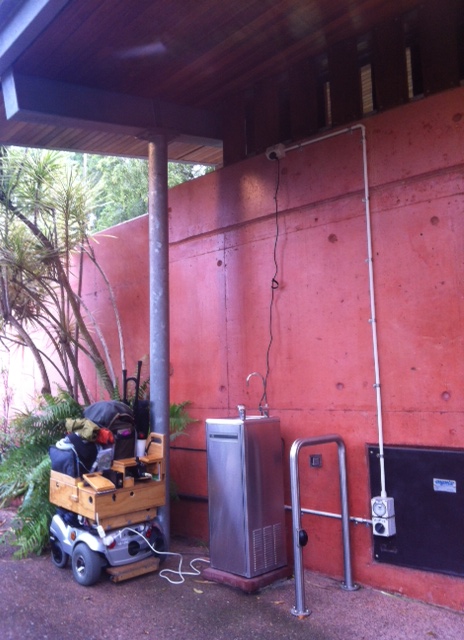
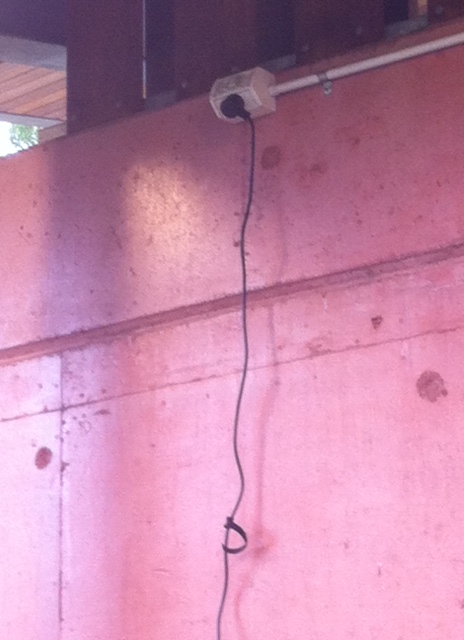
They thought I wouldn’t notice their little power point hidden 12 feet off the ground, but I did!

I’ve been on the road, or road & rail, for about 18 hours since leaving an apartment in Sydney, which is enough time to have drained some batteries.  Being a month later than last year the weather is warmer, and I no longer need to worry about heated breathing air.  My stock of Ryobi batteries will give me another 10 hours of breath, but the Chug* is running out of puff.  There is still another train to catch, a bus, and then about a mile to cover under my own power before I arrive at the same Yurt in Maroochydore were my daughter’s family and I stayed in last year.  At 5:00 this morning I could find only one power point on my careful inspection of Roma Street Station, and it didn’t work, so I had to decide: would I use the remaining power in my batteries to keep searching for power further afield? Or would I play safe and sit still, hoping that the meagre remaining battery power would be enough to make it all the way.

There really is no question, is there? ‘Safe’ is an attractive enough word at the end of an adventure, but not at the beginning! I had been hoping to have time for a roll through Roma St Parklands (the world’s largest subtropical garden in a city centre apparently), which is found beyond the far end of Roma Street Station.  So I went!

The parkland paths are winding and some are steep, and as I progressed the battery level lights were blinking out one by one – with no power points in site. This early in the day there are no coffee shops open – a power source I’ve often used – and as the garden shadows retreated in the dawn, the shadow of concern lengthened. I prayed that quick silent prayer that has a universal appeal: God, help! And for some reason I turned back on a path I was exploring and there it was, a power point! Power point 1Power point 2

Hiding up there in the darkened, early morning eaves of a shelter. It was certainly high on the wall, but reachable if you make very sure the wheels are locked properly……..

(A ranger just wandered by, I think he knows what’s going on, but he didn’t say anything)    

A learned Reverend friend and I were discussing, just a few days ago, why it is that the more incidental the prayer – one might even say the more trivial the prayer – the more likely it is to be answered. A paradoxical thought, but one that people of different faiths or none will recognise from experience. The closest I can come to an answer is that it is an invitation to greater faith.

While the charging is in progress I can’t move far from the chug, especially as the paths are quite steep in this hillside park. But perched on a sort of viewing platform I can see a great deal through a pair of binoculars. So far I have seen several iguanas, a frilled neck lizard running along on his back legs, numerous smaller lizards, scrub turkeys and a large native rat, waterlogged, kink-tailed and much the worse for wear. Good binoculars are the ultimate wheelchair accessory, and must be permanently attached.  You may not be able to get there, but you will still see it all in great detail.

(3, 4 ….. 5 uniformed groundsmen! And a more senior one in a different skin driving a little electric vehicle. My secret charging station is swarming with authority, it must be the Hive!  I’ve noticed that since the whole world began charging phones and whatnot that public power points have mostly been removed, locked, covered up; and the answer is ‘No’, DEFINITELY NOT. But today, so far, no one seems concerned).

I can’t help thinking of the greatly increased difficulty I would have faced making a trip like this just ten years ago. In fact, I doubt it would have been possible at all. The iPhone had not been invented; a device which is incredibly valuable to me. I can open Google Maps in a moment and find my way through the obstacle maze.  You might not imagine how difficult it can be to make progress without knowing where steps are going to be found.  Steps are the great, impenetrable barrier, and having to double back a couple of times on a journey can make a huge difference in power conservation and time.  Public transport apps are also brilliant, a trip can be planned in detail, but when something goes wrong an app will allow you to map an alternate route or timetable and know exactly which bus will come when, which bus stops it will or won’t pick up from; and vitally: whether it will be an accessible bus.

BiPAP ventilators were only invented in the 1990s. When I first began using a mask five years ago there were few, if any, that allowed you to keep your glasses on. The first technician I met said flatly, “You can’t keep those”. What a disaster that would have been! The newest masks I use are made with incredibly thin silicone and are (relatively!) unobtrusive. The lithium drill batteries that I buy from Bunnings to power the ventilator for many hours on the road were not readily available even 5 years ago. The giant laptops we all used a decade ago would not have made very handy communication devices; as do the tiny Macbook Air and iPad Mini that I take everywhere.  There are other examples of new technology that I could not live without, all of which leave me feeling astonishingly privileged.

(A uniformed man just stopped for a look at my Chug, but he kept going.  Queensland is such a friendly, relaxed place. When I come up here I want to stay.)

Privilege carries responsibility, and this I find oddly burdensome.  Tom Hanks’ character gasps out his dying words to private Ryan, “Earn this …. Earn it!” How do I do that? What exactly is the appropriate stance of a privileged life? If there is a debt, to whom is it payable? Is gratitude sufficient in itself, or does being the recipient of privilege come with implicit demands to repay society in some way? This life I have now feels to me like a second chance, a second wind.

(An alarm has gone off, I can hear the uniform coming back in his electric truck.  Is it a general alert? “Intruder in The Hive!”  Should I bolt?)

The other purpose of my trip was an annual review with a Professor of Neurology in Sydney. I saw him a few days ago, and he was upbeat, joyful it seemed, to see me still keeping on keeping on. He introduced me to another doctor saying, “I first saw this man in 2008!” As if to say, ‘can you believe that?’ The implication being that few of his 2008 patients remain at all, and fewer lead much of a life now. I have enjoyed these years so much, so very much, but I feel self-indulgent and wonder … why? … what for?

Time to unplug, power up, and get back on the track to my grandsons!

.

Rejoice!

.

* The Chug – the battery powered ‘tractor’ that pulls my manual wheelchair, and carries all the gear.

.

Drop me a line while I travel …

Go back

Your message has been sent

Warning
Warning
Warning

Warning.