Loosing What you Love

What I love, is music.

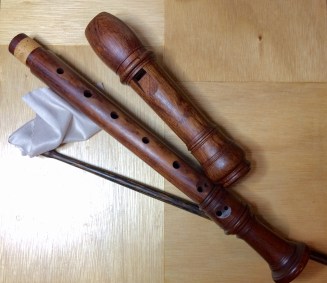
For much of  last year I fought a loosing battle to keep up enough puff for woodwind instruments which I have been playing, on and off, since I was eight. At that age it was simply the school recorder; but our music teacher was nothing if not keen about recorder playing. By the time I left school a decade later our teacher had progressed from “preparing” the upright piano as a harpsichord with thumb tacks in the felt hammers to bringing a spinet to school in the back of her car; and a quartet in which I played had performed in the Opera House and won a 2nd in the City of Sydney Eisteddfod.

Only a couple of years ago I began taking music lessons once again, and I have written several times in these pages about the joys of playing baroque recorder. Perhaps it was the vaguely realised sense that my musical tenure was inexorably waning that propelled me to play in two ensembles and an orchestra every week, with at least an hour a day practicing the many new pieces our director challenged us with. It was a busy life on the busses heading to and from lessons and rehearsals, and best of all a concert now and then. The humour and intellectual stimulation of each visit to the Conservatorium was glorious. Halcyon days, indeed!

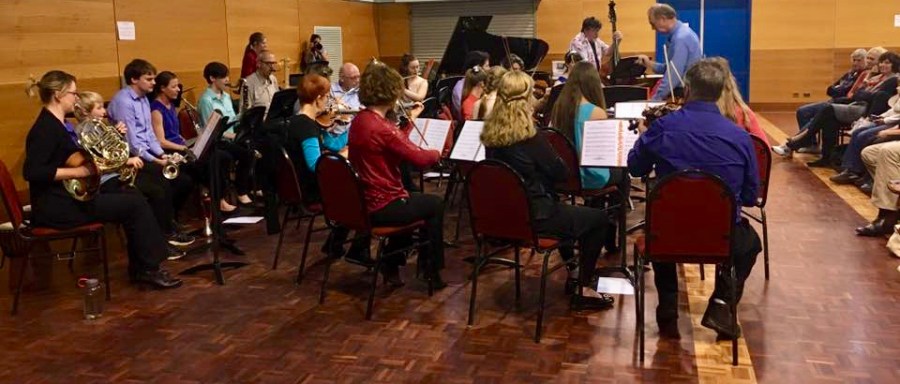
fullsizeoutput_1b
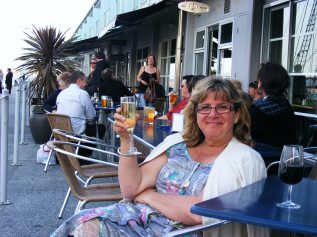
Can you see me in the back row?

Early last year I perfected a technique of playing with the breathing mask in place – not a simple trick balancing delicately tongued diaphragmatic airflow into the instrument with 1.46 KPa of air pressure going up your nose! Afraid that I might finally loose my place in the orchestra I briefly took lessons in two different non-wind instruments, but the sounds were not pretty. Eventually, despite several attempts at denial, reality had to be admitted. By the middle of term 4 I was only practicing on alternate days at home, each rehearsal took several hours to recover from, and a performance set me back for days. It was untenable.

Instinct led me to reach for a decision while we were at sea in November. The thrill of that week gave me a perspective from which I could think calmly and clearly, without the entanglement of maudlin emotion. I put down various thoughts in my journal. I decided that I would finish playing at a point of strength, rather than turning gradually into the bumbling guy in the wheelchair that can’t keep up. I realised that I must be resolute. I set a day on which I would reach a decision, and having done so I wrote an email onboard the ship to the Conservatorium back at home, and drafted a letter of appreciation to the teachers with whom I had shared so much.

This week past, had my path been otherwise, music would have resumed once again. I admit to a temptation to despair, to weep for myself, to indulge in sorrow: there is so much that I miss. I could easily go down that path … but to do so I would have to turn away from something bigger that I feel inside. Just what that bigger thing might be is elusive; but it is hopeful, joyful, and almost always there if I take the time to be quiet. I think it may be gratitude.

I wrote a much better essay along these lines in 2010. The Gift of Loosing Things. This is a brief quote about gratitude, which is, to my mind, the only good way to look backwards:

Gratitude dispels attachment: it’s much easier to face not running on the beach with my kids when I remember the many, many times I have.  In a similar way the choice I make to look ahead and move on is a strong claim on the ground behind me on which I once stood.

Thankfully music is not all that I love,
And I have those that love me.

Rejoice!

Always glad to hear from you….

Go back

Your message has been sent

Warning
Warning
Warning

Warning.

The Joyful Secret

or … How I kept Trump out of Christmas.

I read a heart warming Christmas Email from the minister of a large church in my denomination yesterday, on Christmas Eve. It was one of an avalanche of similar greetings that managed to sneak through the spam filter, and which, after wishing me, by name, in the most personal and familiar terms, a most blessed Christmas celebration, concluded thus:

You may opt out by clicking on the link below:
Unsubscribe.

The slow wheels of my mind began to grind on this surprising post script, searching for a shred of sense. Did the writer mean that I could opt out of the manifold richness that his email had promised me?  Or, did he mean that I could opt out – at this late stage – of Christmas itself; and if so which particular bits of Christmas could I be excused from?

And this clicking word, “unsubscribe”. Is that why Christmas cards appear in our mail box, along with the National Geographic? Do I have a subscription to Christmas? Had I paid for my Christmas subscription? Where could I obtain a Christmas refund?

Dumbstruck, I pondered the Yuletide email’s obscure benediction and little by little began to perceive the deep wisdom of a Christmas Opt-Out. As I spent the afternoon meditating on unsubscription (there being nothing else demanding my attention; all presents wrapped, meals prepared, guest rooms cleaned,  pillows fluffed and thank you letters written, sealed and stamped), mulling over it’s four syllables of mystery, a pure and holy vision grew in my imagination, epiphanous and glorious:

I
saw
before
me some
bright, new
Star of promise.
And a vision came
to me of a Christmas
of a different kind, of a
Christmas “opted-out”, a
Christmas that was Peace
and Goodwill to all on earth:
Christmas without merchandise,
Christmas without K-Mart or queues.
Christmas without wheelie bins packed
to the gunnels with wrapping paper and
blister packs, Christmas without batteries!
Christmas without Michael Bublé and profit and
flashing LED things and profit and elves and profit
and Dean Martin and profit and deciduous trees and
profit and fake snow and profit. Christmas without the
clamorous din of commerce. Christmas without Boxing
Day sales.
Christmas
without
pressure,
Christmas
with Christ! 

In the silent, revelatory night of Christmas Eve that followed the Yuletide Email I delved further into the Peace and Goodwill of unsubscription.  In blissful slumber I dreamed of Christmas devoid of mandatory detention, domestic violence, indigenous incarceration and climate change denial. A somnolent reverie of Christmas sans Donald Trump, sans Pauline Hanson, Theresa May, Tony Abbot and … get this … Santa Claus.  Yes, I opted out of Santa, which is such a relief because I saw Santa after hours in the mall last week, half-disrobed, missing his beard and hat, and he was absolutely not someone on whose knee my grandchildren should ever be sat.

I awoke this morning, on Christmas Day, with renewed Hope. Unsubscription is Joy to the World, and the more you opt out, the greater will be your Joy. This is the long forgotten Noel truth: the Joy of Christmas  is not what you gain, but what you cast aside. Christmas is rightly the season of forgetting, the feast of forgiveness, the cancelling of debts, the shedding of burdens, end of anger, cessation of worry, the failure of fear. Why else would a King be found in a manger? Christmas repeals aspiration, negates consumption, humbles pride. So, let go, drop the bundle, run unshackled, dance free!

Join me…
Opt out,
Unsubscribe,
Rejoice!


… go on, say hello:

Go back

Your message has been sent

Warning
Warning
Warning

Warning.

The Stuff of Dreams

I am on Elizabeth St. Pier, in Hobart, Tasmania, at 3 o’clock on an ordinary Thursday afternoon.

Just above me on the pier is a hotel room in which my Favourite Wife and I stayed eight years ago, when we came here for her 50th birthday. Being here again makes my heart soar with gratitude, with satisfaction, with joy. I feel victorious; a rugged, physical, robust sense of triumph that is, perhaps, slightly at odds with circumstance.

Our first trip here, in 2008, was an elaborately concocted surprise that began with a large picture of the Somerset Hotel in the Saturday travel lift-out of a Sydney Morning Herald. The idea of a hotel on a pier on the southern edge of Tasmania, the place of famous Antarctic expedition departures, imediatley caught my imagination.

sr_aust_hobart_som-on-the-pier_exterior-01-hr_51_1900x654
Somerset on The Pier – surely that catches any imagination!

My daughters, then in high school, quickly collaborated with me to plan a surprise birthday that would end after a week’s holiday with a still bigger surprise. The birthday party was a truly great success, due to the creative talents of my girls, and it was that rarest of all surprise parties: an actual, complete surprise right to the very last second. Driving into the carpark of a favourite cafe a little way out of town Favourite Wife was just a little perturbed, telling me we would never get a table with so many cars there! But the surprise to follow the first surprise was better yet.  After the party we went away for a few days to our favourite beach (Balmoral beach, on Sydney Harbour, where we both played as children, but being boys and girls we naturally stayed at opposite ends of the beach). We had with us carefully forged air tickets for our homeward flight on  Wednesday morning. On Tuesday evening we were in the Art Gallery of NSW, waiting for a lecture which was to be followed by a meal with live music in the cafeteria below, and I gave my Favourite Wife the actual air tickets, with the destination Hobart, Tasmania; rather than Wagga Wagga NSW.  Quite a difference, and for more than half an hour she was quiet; in fact utterly silent. I was on shaky ground not knowing if it was the silence of delight, or of disbelief, or of ….. well, you know that other silence……

A fortnight ago, when Hobart’s weather first appeared on the iPad, today was pegged as a single rainy day surrounded by pleasant, sunny days. We kept our fretful eyes glued to the Hobart forecast every morning thereafter, without much encouragement, but in the event it has been the opposite: a spectacular blue day with cool, clear air and warm sunshine. Perfect weather for a day exploring the history of Hobart, and for retracing our 2008 steps along the waterfront to Salamanca. Our ship leaves in a couple of hours, and I have only a few more minutes on this pier to savour our astonishing conquest. Favourite Wife has gone aboard already, warning me of the sternest reprisals imaginable, should I fail to board before the ship leaves.

50th-birthday-291
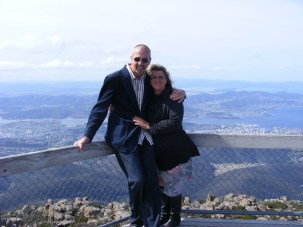
Mt Wellington (the snow was the other way!)

Arriving in Hobart in 2008 we hired a car and drove to the snowy top of Mt. Wellington, then made our way along the waterfront into the city, and then turned left at Elizabeth Street, right onto the pier. Another surprise! Waiting in our hotel room was a large bowl full of 50th Birthday postcards which I had been posting to the hotel for several weeks from Central Australia and from small towns in several states as I had journeyed out and back. I think there were forty odd. So many surprises, what a blissful  week we spent together.

50th-birthday-333
Then …..

On that first evening in Hobart we ate fish and chips and drank wine right here on the pier, so as soon as we were permitted to disembark last night we headed for this same spot. Once again we bought fish and chips (what beautiful fish you eat in Hobart!), remembered the past and toasted the future. Beside us was a tall ship – a smallish tall ship – on which we had sailed up the Derwent river for the princely sum of $15.00. The price has doubled since, but the Lady Nelson looks exactly as we left her.

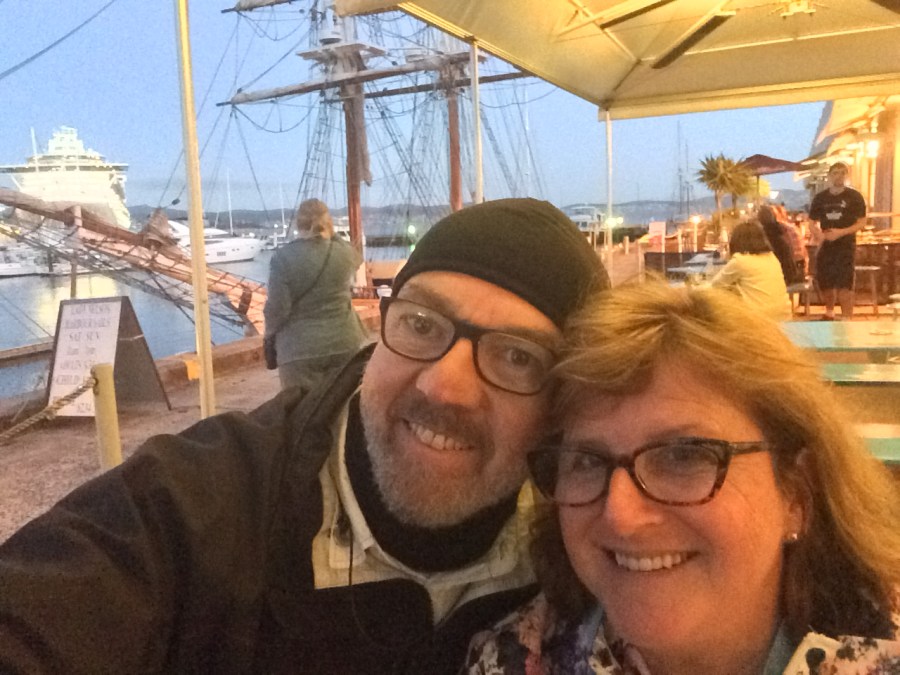
img_0214
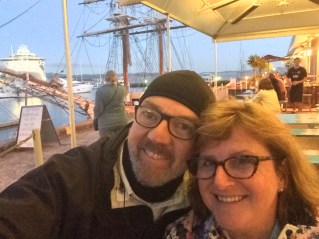
….. and now (with the Lady Nelson beside us and the Golden Princess looming behind).

That moment last night, side by side on a bench on the pier, eight years later, was the stuff of dreams.

With all that has come into our life since 2008, the very idea that we could repeat our great journey would have seemed a faint hope, even a false hope, had we thought to look this far forward; and yet here we are. I recall that on the following morning on our previous visit I awoke with the physical sense that something was wrong, as I had on numerous mornings around that time. Within a few weeks I would begin to struggle with my work at our church, and within six months of that morning in Hobart we had lost our employment and our home after a diagnosis of Motor Neurone Disease. This day, eight years on, might not have been; indeed I myself might not have been by now, but I am, and we are, and it is!

Rejoice,
indeed Rejoice!


Drop me a line!

Go back

Your message has been sent

Warning
Warning
Warning

Warning.

The Hazards

One doesn’t expect problems; at least not problems beyond remedy.

I am writing eight km east of Tasmania’s rugged wild east coast.
East of east!
Wind is whistling through the nooks and crannies of the ship’s steel superstructure. I am on the deck outside our stateroom under a ragged grey sky that perfectly suits the wild, rocky coast, the thickly timbered hills and lines of blue green mountains hiding way to the west.

But I’m tied down. On a short leash.

While my Favourite Wife has traversed all decks, familiarised herself with the ship’s (to me) incomprehensible deck plan, and explored in detail all the shops and several of the dining and entertainment areas onboard, I have been right here, shackled to a powerpoint; reading and writing “far from the madding crowd”. While I like this sort of day very much in theory, especially staying away from shops, being physically tethered to a powerpoint is tedious indeed. And it is intimidating. I am amazed how such a change can dampen my resolve, growing tendrils of doubt around my robust hope for today, and tomorrow, tomorrow’s morrow (did Shakespeare say that?….) when we plan to go on shore in beautiful Hobart.

The problem:
Long before paying for our tickets to Tasmania on the Golden Princess I had researched the possible hazards of voyaging with a wheelchair and ventilator; consulting with our GP, the travel agent, the Princess Line, and reading accounts of other travellers.  We booked, we waited months, then weeks, then days, then hours …. and came onboard yesterday. All seemed well, overwhelmingly well, superb even! The ship left Melbourne in the late afternoon and we were setting up our room before heading out to explore a couple of the ship’s 15 decks when I discovered that none of the three chargers for my ventilator batteries would respond to the ship’s voltage. This was a fright like no other I have ever had. People talk of experiencing a vehicle collision in slow motion, and it was something like that: in a blink of time I calmly saw the degree of the problem, the possible consequences, the immediate implications for our holiday, a range of possible paths through the dilemma, and resolved that none looked too promising.

When the new wheelchair arrived four months ago the imperative  task was to design and build a new housing for the breathing ventilator, power supplies and batteries. This box now sits compactly under the seat rather than hanging behind as it did previously, greatly enhancing the chair’s centre of gravity. Inside are three batteries, three battery chargers of two different types, and capacity to run 12, 18 and 240 volt supplies. The essential first and last job of every single day is checking batteries. I endeavoured to make this set up foolproof and able to cope with any emergency. There is even a second complete ventilator under the seat, along with various spare parts and a tool kit with a small gas soldering iron. But none of my careful designing addresses running for six days without a battery charge. Fortunately the ventilator itself is perfectly happy with the ship’s power, but how can I make four batteries, 17.5 Amp Hours of stored power, enough for one and half days at home, last six days? And still have enough battery power to travel home from Melbourne by train?

The only answer is to find a 240V powerpoint on day three at the dock in Hobart, and spend most of the voyage right here, fettered to the powerpoint in our stateroom. Fettered, that’s a good convict word, especially as we head for Port Arthur. This isn’t how we had imagined our maiden voyage, and we both find it more than difficult to accept.

Yesterday evening I decided to use some of the remaining ration of battery power to look for a solution. I visited the customer service desk, sought out our room steward, and asked other crew we met. Early this morning I went 6 floors below to the medical centre. No one, understandably enough, could see through this technical issue. I asked if I could meet a technical officer, and instead was directed to the “executive housekeeper” for our deck.  I learned from her that the ship has eight electricians, (eight, imagine!). The electrician responsible for stateroom issues is not available until later today, but an appointment has been made.

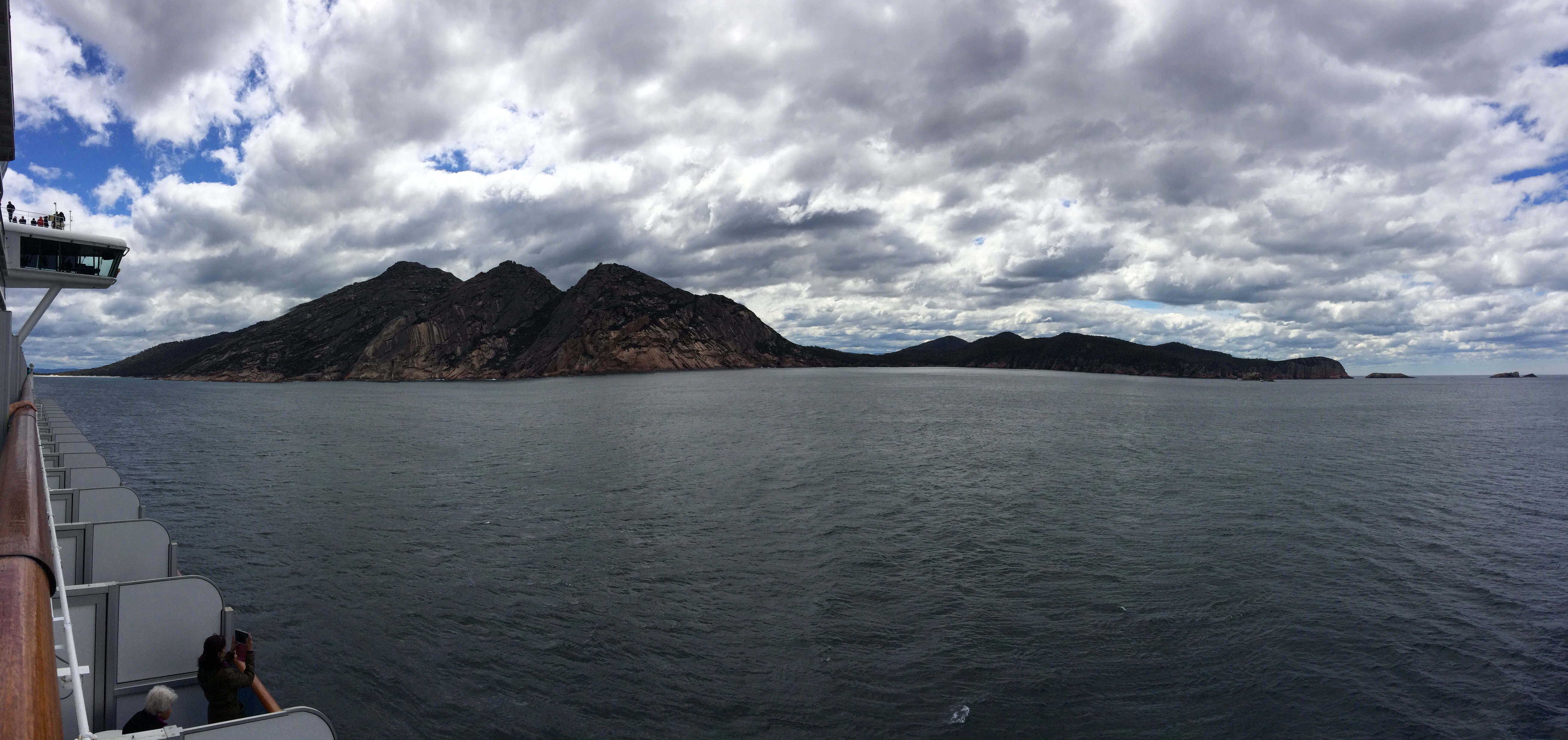
Happily my powerpoint manacle, made with two extension leads, is just long enough to reach our private balcony, which is a delightful spot. It’s about mid afternoon now, and we have just sailed slowly past this:

Four stark, granite mountains plunging sheer into the deep channel that approaches Wine Glass Bay. Known as The Hazards, they were a danger to be skirted by sailors who used the bay as a whaling station a century ago. The Hazards are a stark witness to my tethered soul searching, as my adventurous spirit gives way to fear, and I wonder if I am simply foolish. I can’t shake of the possibility that the ventilator, as well as the battery chargers, might have failed to work on the ship’s current. How irresponsible have I been; and have I exposed my family to absurd risk by heading to sea? It’s odd, the way our thoughts and emotions can swing, tethered in their own way to the momentary experience of life. What is the appropriate balance of adventure, hope, responsibility and caution? Am I reckless beyond belief to be running the ventilator – vital medical life support – on cordless drill batteries and a bundle of switches purchased on eBay? As the Hazards drift slowly out of view these anxieties, hazards of the soul, seem to me as critical as the problem itself.

Version 2
The Hazards

Postscript.

Later that afternoon the electrician arrived, looked over all my gear, and showed me that most of my equipment, the ventilator itself and the SmartDrive transformer,  was happily running on the ship’s 110V system. But the Ryobi battery chargers were all rated at a minimum 220V. He said the ship had a second, 220 volt system; and there would be an outlet here in our room, although it took even him some little time to locate the point hidden behind a bed. He returned a while later with an adaptor marked MUST BE RETURNED TO ELECTRICAL WORKSHOP, and all was well. The batteries began to charge, winking their reassuring green lights in place of alarming red. Almost twenty four hours after discovering the problem, with 40% of the battery storage already spent, the relief was extreme. Life returned in a heady rush of exhilaration.

The Hazards of the Soul, though each needing to be addressed, were no match for the call to explore the ship and begin our long anticipated adventure together.


Rejoice!


Drop me a line!

Go back

Your message has been sent

Warning
Warning
Warning

Warning.

Faux Bassoon

With thrill and mild terror I am waiting at the back of an auditorium while the able bodied members of the orchestra – everyone else, it seems – set out chairs, move the grand piano, assemble instruments and pass out music. The piano lid is propped up high; the big double basses come out of vans and are wheeled in the side door. I’m hiding against the back wall, looking studious and hoping my inactivity is not too obvious. I’ve never in my life performed in an orchestra, this is exciting!

The conductor wanders past muttering numbers. Not the usual count, One-two-three-four, he’s up in the 70s. Chairs, I realise. He has the difficult decision: how many are coming?

The audience begins wandering in. All ages, but many are clearly parents with younger siblings in tow. The grey ones are grandparents, casting around the room for a grandchild that has grown half and inch and changed their hairstyle. Half the orchestra is my age, give or take a decade or two, and half are enormously talented school kids.

img_0287
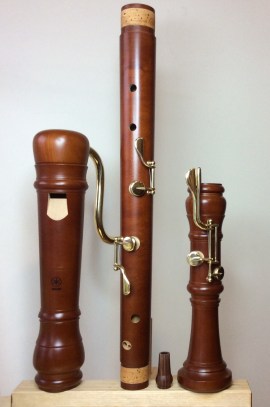
The Faux Bassoon

I will be playing bassoon, a very close relative of the beloved oboe. Oh, Oh Oboe! Strictly speaking, in the interest of full disclosure: it says bassoon on my score, I am playing the bassoon part, but not quite the bassoon itself. When it comes to the matter of actually blowing, it will be my bass recorder. None the less!

Ten minutes before we begin an extra row of chairs is put out. And another! Very promising.

Five minutes left and nearly every seat is full. Favourite Wife and Teen Girl have been shopping while we prepared (no surprise there) and now they are back to find a seat. There is a gentle murmur in the hall, gradually rising to a buzz of anticipation.

I’ve been to many concerts, but I have never felt like this. My childhood was peppered with concerts, or “the symphony” as my grandmother called it. I lived with my grandmother and great aunt for some of my teen years, and on the first Friday of every month they hosted a dozen or more of their school friends; having spent their whole lives closely connected. I sat in on the gathering now and then. We ate cucumber sandwiches with the crusts cut off. My grandmother used to freeze sliced bread, and then cut each slice in half, through the crust, to make the bread thin enough for this delicacy. Most of these older folk had season tickets to the Sydney Symphony Orchestra, and on account of their advancing years there was frequently one who could not attend. Which was my opportunity. I can’t easily forget the many long taxi rides into the city, wedged in the middle seat between fox fur and lavender. But arriving beneath Sydney Opera House and joining the dignified throng milling up the grand staircases dispelled all discomfort. Men wore dark suits, some carried silver topped canes, even the odd top hat was still to be seen.

But no orchestral concert felt at all like this one. This time I am utterly invested in each tiny detail. I cant believe how good we all look! And the inspired sparkle in the instruments warming up is impossible to miss. The opening item, a young string group, play beautifully; and the odd poorly tuned bar hardly rates attention as I feel so keen that they should succeed.

I first heard this orchestra, the junior orchestra at the Conservatorium in our city, on a cold, wintry evening only ten weeks ago. Woodwinds are becoming more taxing to blow as the months pass, and I was so energised by the performance that I conceived a whole new musical chapter playing 2nd violin. You may perceive a pattern here, harking back to a certain woodwind beginning with O. Having rashly purchased the O instrument outright, this time around I more cautiously hired a violin, enrolled at the Con, and got the shock of my life. I have been playing instruments and working with all manner of tools and machines most of my life, but I have never held in my hands anything as alien and awkward as that violin. The second violin part suddenly looked much less promising, and there being no call for a seventh or even an eleventh violin section, I packed the awkwardness of horse hair and cat gut back in its box. But I had, at least, given it a go.

My teacher – I am so grateful to him – was not the least concerned by my erratic flights of musical fancy, and simply suggested instead that I play Faux Bassoon. I’ve been practicing with the orchestra for just a few weeks now, entering an entirely new world of counting rests for a dozen bars, playing a flying run of semiquavers in very strange intervals, resting five counts, playing six and a half minims, and so on. The joy of being immersed right in the midst of this live, thrumming, beautiful sound is overwhelming.

Just a few minutes more and I will be sitting two chairs away from the oboist, and I will play the bass part for Gabriel’s Oboe, the haunting, glorious Enrico Moriconi piece from The Mission. The orchestra, our orchestra, will play ten pieces. It will be euphoric, I wish you were here…

And suddenly the audience is quiet, something is about to happen.

Rejoice!

fullsizeoutput_1b
Can you see me in the back row?

Please note: the web address of Rejoice! has changed. Please visit http://www.rejoice.live
As always, I’d love to hear from you.

Go back

Your message has been sent

Warning
Warning
Warning

Warning.

Atop a Mountain

Two years studying Baroque Recorder culminated last Friday in a student concert. A small affair really; about 20 students, most still at school; and an audience of mums and dads. I turned that upside down: parent performing and two of my children in the audience. A small affair, but …

… my goodness!

“There he was transfigured before them. His face shone like the sun, and his clothes became as white as the light.”

A highly inappropriate and profane use of Matthew’s description of Christ transfigured on the mountain, no doubt, but nothing comes to mind that captures so well the transporting, fulfilling thrill of that concert performance. It was a shining, glorious moment; time seemed suspended, and for days I walked on and on in the light of that moment.  In fact I can still immediately summon the brightness of the recital and bask in its joy.

Lest you think I am boasting too much; this will bring us all back to earth: Just a dozen bars into the first tricky phrases of a solo piece I stumbled badly, completely stopped playing, and apologised to the audience. Not classy at all. Fortunately my music teacher had drilled me in beginning the piece over and over from several different ‘rehearsal marks’ for just such a moment; and so I was able to pick up again and from then on the piece went very well. Except for one other little two year old detail.

My grandson was in the audience. In our home he often travels on my lap as I roll up and down the hall doing tasks about the house, so when I rolled down the aisle to take my place behind the music stand, he wanted to come too. Furthermore, at home when I play recorder I give him a plastic descant to toot along with (he’s very good!); and so during my solo piece he had two points of grievance with me.  As I played on after my false start I was vaguely aware in a minuscule pocket of concentration not required for music that my daughter was trying to keep him quite. I could vaguely see her, just above flights of semiquavers on the score, standing up with him and eventually walking straight toward me, turning left in front of the music stand, and leaving the room. On I played!

And the solo finished well. It was a technical piece, introduced with an enthusiastic preamble by my teacher in which he mentioned that the piece, Telemann’s Fantasia 1 for Recorder, is commonly chosen by students sitting for their A-Mus. examination. No pressure though…
Here it is, played by a master, Aldo Bova.

It really did go well, and it was well received. Towards the end of the piece I felt my concentration shift towards listening to the sound, rather than the technical task of creating it. I have heard musicians describe this experience of intense concentration seeming to move them to being observers of their own performance, sometimes even from above. The following day the teacher sent me the most generously worded review of my performance, which I won’t reveal, but which will stay with me as a gold medal of sorts.  Deeply satisfying.
Following the solo I played the bass part in two Telemann trios; one with another adult recorder student who is a highly accomplished sax player and teacher at the Conservatorium. He was brilliant, superb.

The great trouble with most mountains is that they seem to place themselves, for reasons I don’t understand, right beside valleys. So problematic! But not the mountain I am on. Perhaps it’s a Mesa, one of those enormous flat topped giants, and the cliff edge is out there somewhere, waiting for a careless step. But I think not. It was transfiguration, and it came not just from two years of daily, often lengthy instrument practice, nor from the tuition of an excellent teacher, nor from a generous audience – though all those things contribute. It was bigger than all of that. A flawless performance of a Telemann Fantasia performed in private would not have remotely the same reward. It interests me that Christ met his transfiguration in the company of three friends, and tellingly the heavenly voice speaks from above the mountain, “this is my beloved son…” Transfiguration, whiter that white, belongs in a myriad of different expressions to people who live, work and strive together; family, friends, community; combining talents and effort, pursuing something grand, discovering something boundless.

Rejoice!

Please note: the web address of Rejoice! has changed. Please visit      http://www.rejoice.live

As always, I’d love to hear from you.

The Parallel Games

I could win a medal for disinterest in sport, so competitively lackadaisical am I.  But not when the Olympics are on, and absolutely not when the Paralympics finally come around.  The Paralympics are riveting, astonishing, compelling, just unmissable.

I think there is a comparison to be made between the two Games, Olympics and Paralympics. In so many ways the Paralympics are the poor cousin: witness the later broadcast time each evening; cut back from three channels to one; and the shocking fact that a few weeks ago it seemed that the Paralympics would not be properly funded due to over expenditure on Olympic ‘problems’. But the Paralympians are in no way poorer. For 11 days these men and women have brought joy, vigour and inspiration into my home. Every moment of competition seems a celebration of being alive. These people are beautiful; transparent, vulnerable and made of steel. The sense of community is so tangible you want to breathe it in. The wonder and delight of our swimming team is utterly refreshing. Paralympians seem thrilled to bits with every result they achieve, wherever they come in a race; and I’ve yet to see a bronze medallist berate themselves publicly for “loosing gold”. The commentators, too, are more generous in their approach, celebrating everything with everyone, but without any sense of concession: there is no doubt that the competition is earnest and intense. There is such evident delight on so many faces.  A broad sense of gratitude and humility pervades post-event interviews. Unappealing bravado and posturing, sadly a growing feature of the able bodied games, are practically absent; replaced with wide-eyed thrill. Sweeping generalisations, no doubt, but would you agree?

On Friday last week, just as the games were beginning, I took the armrests off my wheelchair. Unlike all other aspects of the New Bugger, they aren’t mounted well and they keep rubbing on the wheels.  I can’t say why I chose last week to make the change, but I must say my chair feels positively Paralympian without them! There is a bit more room to push, and better vision of the floor … or something. I feel like one of Australia’s fabulous Rollers zooming around our living room; we watch them and I think I’m right there on court!

I’ve been competing vicariously, I’m sure; briefly living a huge, transformed life through these beautiful men and women. I am deeply drawn towards the way Paralympians robustly embrace their own reality. Ellie Cole, Australian swimmer, lost her leg to cancer at age two. In an interview she said this, “People see it as tragic, but I think it’s the best thing to happen to me”. Gold medalist in both single and double wheelchair tennis events, Dylan Alcott, said, “I wouldn’t change my situation for the world”. I also heard Alcott say, “Everybody wants to be different, and what better way than to have a disability and embrace it and get out there and do something with it”. These ideas are unorthodox and confronting. In contrast, I find myself heartily sick of our aspirational world, where the vaporous notions of perfection are thrust at us from an endless supply of doctored images, clinically targeted advertising, super-stardom and other deceitful narratives. Sadly his has a parallel even in the Christian world where the subtle, constant, underlying pressure of divine healing and a spiritualised version of upward mobility become oppressive to many, like me, who have not discovered it.

The words of Leonard Cohen’s very famous song come to mind:

Ring the bells that still can ring
Forget your perfect offering
There is a crack, a crack in everything
That’s how the light gets in.

Laurence Mooney, comedian and a panel member on 7Two’s nightly review of the games, described his sudden introduction to the world of disability at the London Paralympics four years ago. Kurt Fearnley, Australian wheelchair medalist and four time Paralympian, had deliberately taken him first to the food hall in the athletes village, where Mooney saw this basic function, eating, being achieved in innumerable, complex ways by people of every imaginable shape. “It’s humanity”, Mooney said, “the bottom line is humanity”

My Favourite Wife and I have loved every moment of this glorious, hard, serious, gentle, humane gathering; and I dare to say the world is a much richer place for it.


Rejoice!


Please note: the web address of Rejoice! has changed. Please visit      http://www.rejoice.live

As always, I’d love to hear from you.

Go back

Your message has been sent

Warning
Warning
Warning

Warning.


One of these Buggers is not like the Other One

old and new 6

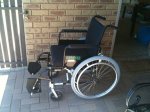
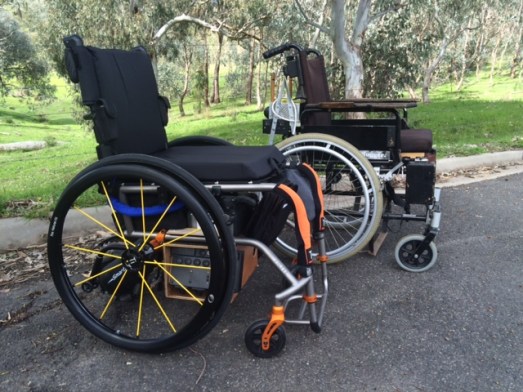
The difference between the Old Bugger and the New Bugger is enormous. Truly vast.  So unalike are they that clichés fail completely. By comparison chalk and cheese taste much the same, birds and bats are indistinguishable, night and day … synonymous. After six years I had no idea that a wheelchair could be this good.

Bugger original photo
“Bugger”

An apology, first up, for all the bad language flying around in this post. For the uninitiated, Bugger is the unintended name of my wheelchair, which stuck firmly after I posted its picture on FaceBook. The single word caption was my timid way of announcing a great challenge to the world.  Family and then friends quickly latched onto the name, and I must admit I still find the wry humour most attractive.


I wonder if I can give the ordinary populace – those at the disadvantage of not having wheels – any sense of the difference between a heavy old collapsible wheelchair and a top of the line, rigid-frame chair. Have you ever dreamt that you could fly, soaring over valleys and oceans, only to wake in the morning to discover the sobering reality of unyielding gravity? Well, New Bugger is as close to flying as I can imagine, and every morning it’s a dream come true. I reckon this chair is all of five times easier to push; the thing goes like a bullet!

Old B has been with me since Christmas 2009. (A gift Unwelcome). It was a second hand chair which I rented, then went on to buy because it was unusually narrow and long – well suited to my height. Old B has been a great companion, and we’ve done some remarkable things together. In 2010 we spent a month in the Gibson Desert, we’ve been to Queensland twice, and to Sydney and Melbourne a dozen times each.  She’s had six new wheels: two on the back, four on the front; and numerous modifications in my workshop. A bog standard folding chair, sturdily made of aluminium tube and lots of steel, all in gloss black.

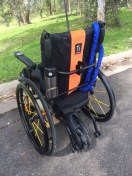
old and new 2New B has been with me since mid July. Made of Titanium tube with alloy parts, the new chair was custom built to a drawing that took weeks to develop with GMS in Melbourne and the TiLite factory in America. Every dimension is individually set for the user’s physique and TiLite describe their chairs as a “custom made prosthetic”. To get such a result costs no small sum: $grrcoughcough in fact. The SmartDrive wheel on the back was almost as much at $sneezesniff; a grand total of $aweekinbed.

Here is a fact that all wheelchair initiates should be told:

Collapsible wheelchairs are designed for carers;
Rigid frame chairs are designed for users.

I didn’t know that until I began ordering my rigid frame chair.  It’s an oversimplification, but essentially true. Collapsible chairs are designed so a carer can fold them up a stick them in the boot of a car. Handy for the carer, but the disadvantage is that part of the energy expended by the user goes into all those folding joints and pins, and never reaches the ground. Pushing a rigid chair is a totally different experience, the focus of energy into motion is brilliant, and the chair is also beautifully silent. I’m a stealth machine going up our hall, I regularly startle the household!

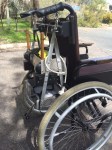
A rigid frame is especially valuable for my purpose; and here it gets a bit technical. old and new 4A rigid frame has lots of empty space under the seat which is occupied in a folding chair by the folding mechanism. This under-seat space is where I have put the breathing apparatus and batteries on New B, rather than hanging behind the seat as it was on Old Bold and new 3Why this matters so much is that it moves the centre of gravity forward, which in turn means the push wheels can be moved forward. This is everything! As the wheels move forward, even in small increments, pushing becomes easier. On Old B much of the effort had to be applied while my hands were level with or behind my shoulders. On New B the point of power delivery is in front of my shoulders, and so you lean into the work and it is far more efficient. Also, as the axle moves forward the turning point of the chair moves forward until it is ideally right beneath you so that you can spin around “on the spot”.  Old B didn’t do this either and so every small or large turn took considerably more effort as the longer wheel-base of the chair had to be brought around.
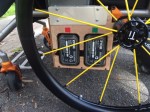
old and new 1Access to change the batteries and operate switches is through the
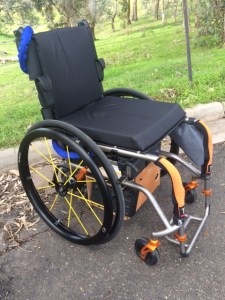
wide gaps between the ‘PBO’ wheel spokes. (Each spoke contains over 30,000 strands of Polyphenylene Bensobisoxazole fiber, delivering 3 times the strength of stainless steel at half the weight). Beside which they look very cool indeed.

old and new 5The one small downside of moving the wheels forward is that the chair becomes “tippy”, inclined to tip backwards, as I discovered to my discomfort while going backwards down the ramp out of our vehicle. Notwithstanding anti tip bars New B tipped so effectively that the chair sailed right over me and ended up on its wheels again in the car park, suffering a tiny scratch. The chair, not me, I didn’t get a scratch at all but my Favourite Wife told me I looked like a tortoise, which might be worse…
 

Rejoice!


Please note: the web address of Rejoice! has changed. Please visit      
www.rejoice.live

As always, I’d love to hear from you.

Go back

Your message has been sent

Warning
Warning
Warning

Warning.


Comorbidity

Having one physical problem is a challenge, but what must be avoided, at all cost, is having two. The specific comorbidity I fear most is dandruff; which I will attempt to explain…

When I first heard the word comorbidity I was attending one of those joyful hospital admission interviews. If I recall correctly it was quite late in the evening and a young and overworked resident was working through volumes of paper and a hundred questions.  Momentarily she slipped into medico jargon and out popped this arresting new term, comorbidity. My flash of instant insight was that it must mean dying of two things at once, which sounded like a tough gig.  Do you have a comorbidity? I did not know how to answer, there being no small uncertainty right then that I might be dying of one thing; let alone two!

Merriam Webster sheds some light:
Comorbid – existing simultaneously with and usually independently of another medical condition.

That was at least five years ago, and in the interim I have discovered that I can actually cope quite well with a couple of things going wrong at once; indeed most grownups are dealing with a stew of big and small dramas all the time. The great challenge, however, is not how I deal with two problems at once, but how everyone else deals with my two problems.

Which is where dandruff comes in. Picture the scene: you meet someone, let’s say it’s me – just for fun.  I have a wheelchair, but so what? No problem, right?  You offer me your hand to shake; you are eager to greet and maybe even meet a new friend.  But at that very moment, your hand mid way across the void, your eyes fixed on mine, your sharp peripheral vision kicks in, the ocular function at the animal core of survival, and a subliminal alarm registers deep in your brain’s occipital lobe. DANDRUFF!  Your gaze instantly narrows, your outstretched hand slows fractionally in space, you falter, tense nanoseconds pass as your gaze darts hither and thither seeking the confirmation you inwardly dread: Comorbidity!

My God! This person, who came so close to entering your sphere of existence, is a leper! It doesn’t stop with the unsightly dandruff dusting his jacket either; involuntarily you catalogue with stunning rapidity the range of defects he possess. The wheelchair, yes, but now you see the small, faint food stain on his shirt cuff; you notice a patch of unsightly lint balling slightly on his jacket; there’s that odd breathing mask; his glasses are grossly out of fashion; and, come think of it, there’s something unsettling, disturbing even, in his smile. But you are committed now, and the handshake must go ahead. You hope to goodness that he doesn’t notice you frantically scanning the room for hand sanitiser.

So, I have become a scrupulous consumer of anti-dandruff shampoo (the strong stuff with the boring label). Am I a complete nut job, or do all of us have dreadful thoughts like this at times?  Do we share this readiness to judge, to categorise, to confirm our prejudice; do we all have that constant urge to peg everybody against our own superior normality?

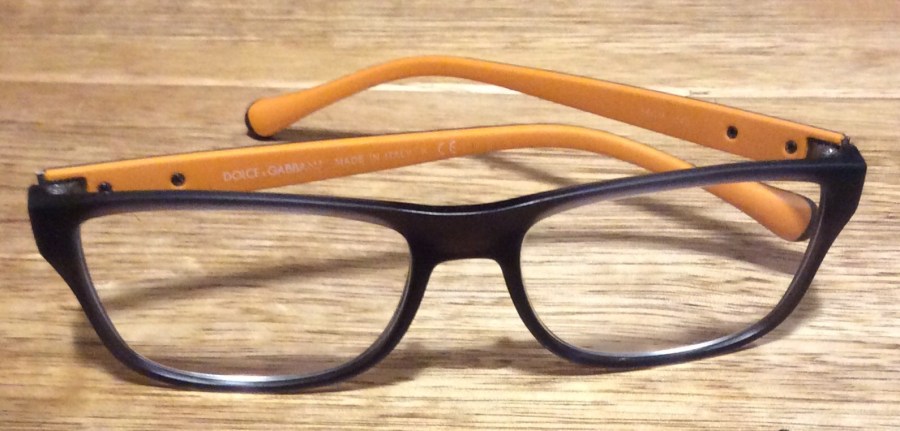
Antidandruff shampoo is part of an elaborate defence shield that I have recently recognised around my public persona. I watch myself being vigilant to present as somebody in tip top physical and mental condition; a veritable specimen of wellbeing. I expect I do this because I have experienced the opposite: occasionally I have been written off, judged incompetent, and it’s no fun at all. So I scrub my scalp, I look people confidently in the eye, my wardrobe drifts towards primary colours, I’ve grown a very trendy beard (so I tell myself), and my glasses are sharp!

See?


Normal is a supremely hard act to sustain, but we try, don’t we?


Rejoice!


Please note: the web address of Rejoice! has changed. Please visit      www.rejoice.live

As always, I’d love to hear from you.

Go back

Your message has been sent

Warning
Warning
Warning

Warning.


Grim News

It’s 3:23 in the morning, and I’m awake
because my great, great, grandchildren won’t -let -me -sleep.
My great, great, grandchildren ask me in dreams
what did you do, while the planet was plundered?
what did you do, when the earth was unravelling?
surely you did something when the seasons started failing
as the mammals, reptiles, and birds were all dying?
did you fill the streets with protest when democracy was stolen?
what did you do
once
you
knew?                                     – Drew Dellinger

Cape Grim, Tasmania, is one of only a few places on the globe where absolute atmospheric carbon content is measured. This week, for the first time in our history, the atmospheric carbon reading at Cape Grim reached 400 ppm (parts per million). When I was in high school, forty years ago, atmospheric carbon was only 300 ppm. There is nothing vital in the number 400, and the same measurement had previously been recorded in northern hemisphere observations; but surely we should be arrested by it; we should stop and think, at the very least.

I have to look back seven or eight years, I guess, to remember a time when I still held any reservations about the truth of Climate Change. Given that the Kyoto Protocol dates from 1997, I am embarrassed that I entertained doubt for so long. Like many, I accepted that the climate was warming, but retained reservations as to its cause. Is it ‘anthropogenic’? Is it our fault, or is it merely cyclic? A fair while back a good friend in the scientific community told me that a professor he greatly respected believed firmly that it was not human induced change, and the notion that mere humans could influence the climate of a the planet was arrogant and overblown humanism. For a time I fell in behind this view, but eventually the sheer number of world-leading scientists who were resolute in their conviction convinced me otherwise; that and the increasingly duplicitous statements and vested interests of the climate change deniers. If I needed final proof, it might have come in 2009 in the infamous words of the then Leader of the Opposition, Tony Abbot, “The climate change argument is absolute crap”.

Last year I set to reading a couple of serious books on the subject.  As I read the science of warming I was chilled to the core. If the authors I read are correct it seems unarguable that the point at which global catastrophe could have been averted is now well behind us, and even the most aggressive cuts in global carbon emissions cannot now save the Earth’s climate from massive and long lasting change. I honestly fear that the world that my young grandchildren will inherit may be vastly changed within decades.

I become Grim indeed when a each new ‘hottest ever’ event is reported; when another pacific island loses its shoreline; when I read of tropical fish wandering down Australia’s coast looking for cooler swimming; when I hear of the wine industry buying large chunks of Tasmania because their crops are failing on the mainland; when exotic, tropical diseases pop up in places they have never been seen before; when choral bleaching consumes vast chunks of ‘our’ reef; and most of all when our political leaders ignore it all. My thoughts often grind down, down, and down, until they are apocalyptic. I see famines, wars, and climate refugees not in the millions that are currently paralysing European borders, but in hundreds of millions as the poorest nations on earth are dealt the heaviest blows. It’s always the poor who pay the price.

But nobody I know share’s these gloomy thoughts, or if they do they don’t tell. I wonder sometimes if my current personal experience of some form of spiralling physical decline has altered my perception: am I over reactive, pessimistic, depressive, anihilistic?

I’m deeply troubled, and I don’t know what to do with my trouble.  I’m troubled that Christian churches are silent.  I’ve never once heard Climate Change mentioned seriously from a pulpit (but I have heard it used as the punch line on a hot Sunday morning). An American science commentator interviewed on the ABC a couple of years ago predicted that the right wing, creationist churches in his country would become a vocal agency for action against climate change. While not a practising Christian himself, he included the church in his list of bright points in the debate because he saw that Christians have a biblical commission as custodians in creation. This man was sincere, optimistic, and apparently wrong. Except for the wonderful Pope Francis, churches are about as silent as the fossil fuel industry.  In recent years my own denomination has only asked me to take a political position on one issue: gay marriage. To my mind that question is vanishingly insignificant compared to the condition of our only home. How will the future judge this generation?

I am a grandparent of six (at the tender age of 54, how’s that?), and Dellinger’s poetry is plain, raw truth to me. When my grandchildren look at me they do so with the most delightful, endearing and pure trust. They love me, but they have no idea about the world I will leave to them.

From my home, here in Paradise, I gaze daily at great beauty and feel calmed by such simple things as the colours of leaves and the tone of the breeze. These are God’s gifts; surely they belong to my children and to my children’s children’s children. Borrowing a well used phrase from an Old Testament Prophet, “How should we then live?”


So am I off my tree, or is it the trees we should fear for?
As always, I’d love to hear from you.
(As a footnote to this post, I will include a scary story…)

Go back

Your message has been sent

Warning
Warning
Warning

Warning.


Scary Footnote

Jellyfish, the subject of Australian biologist Lisa-Ann Gershwin’s book Stung, have been turning up in mind-bogglingly vast ‘blooms’ in recent years.  Jellyfish are a primitive life form, able to thrive across a broad spectrum of conditions. Intensely opportunistic, jellyfish can rapidly fill vacancies in the oceans caused by overfishing, pollution and climate change. As an example of just what can happen when ecosystems become stressed, here is Gershwin’s description of one of the world’s most researched and documented jellyfish blooms. The species Mnemiopsis which was transported into the Black Sea in shipping ballast water:

Between the late 1980s and 1998, Mnemiopsis surged to become the Black Sea’s dominant planktonic species. Summertime blooms contained 300– 500 specimens per cubic meter; to put this into perspective, that would be about 300 clenched fists in an area no larger than the leg room under a small breakfast table. Its population was estimated at over 1 billion tons, more than the world’s total annual fish landings.

Mnemiopsis is astonishingly fertile. While an individual’s life expectancy can be up to several months, it can begin laying eggs within 13 days of its own birth. By the seventeenth day, it lays eggs daily and can lay up to 10,000 per day. Even young individuals lay over 1,000 eggs per day. The number of eggs produced increases with age, and Mnemiopsis is believed to lay eggs throughout its lifetime, depending on food availability. Eggs hatch within 12 to 20 hours of being laid.

By 1993, it was estimated that Mnemiopsis comprised up to 95 percent of the total wet weight biomass (of the Black Sea) — including all the copepods, all the anchovies and sardines and their eggs and larvae, all the invertebrates and bottom fish. Ninety-five percent of all living things.

(Gershwin, Lisa-ann, 2013. Stung!: On Jellyfish Blooms and the Future of the Ocean University of Chicago Press.)

Gershwin’s book contains dozens of alarming examples; and a devastating prognosis for the oceans of our world. Rising acidity, the direct consequence of billions of tons of carbon dioxide dissolving into the oceans, is highly damaging to corals and to a great many ocean inhabitants. But jellyfish? … they don’t seem to mind in the least. Type Jellyfish Bloom into Google and you will see some eye popping stuff.