Return to Paradise

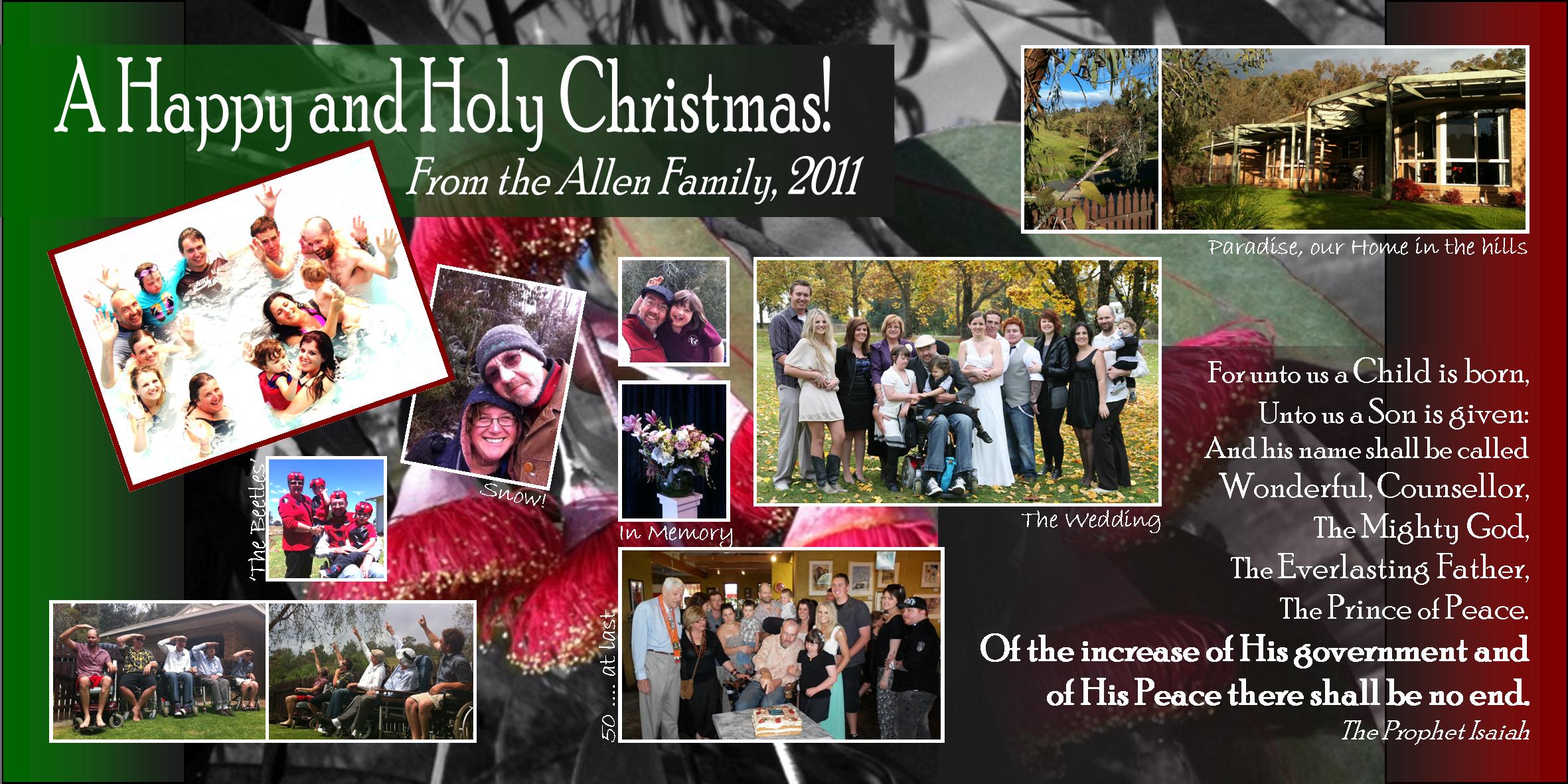
It’s taken ten days, when it usually takes me only three, but finally soul, spirit and body have fallen into happy agreement that we are home.  At home, in fact, in Paradise.  This unity of being is welcome and very good.  I am no longer living in two or three disparate worlds, no longer split between present reality and the taunting dreams of yesterday, yesterweek, or yesterlife.

Outside my glorious new window ice-white sheets of heavy rain are rippling across the greening hill, the tall gums on the ridge completely veiled.  There is no sound of wind tearing through their leaves this afternoon, only the cacophony of a downpour: solo drips, drops and splashes against a backing choir of white rain noise.

The rhythms of life are returning, and with them a wholeness that I can scarcely believe I had forgotten so easily.  Somewhere further inside the house my Little One is watching her daily allowance of ABC 3 children’s programming (which for some reason she always refers to as “ABC 2”), having recently come inside from her usual round of trampoline bouncing and swinging on her “playground” (a swing set). My Favourite Wife and I are the ever appreciative audience for this performance, which we take in as we share our afternoon pot of tea in the cool of the day.  Somewhere else inside the house the Favourite One is right now busily at work on the finishing touches of a sewing room, one of the not-insignificant advantages of adult children finally leaving home!  As my cousin pointed out last week, you come home from holidays with “fresh eyes”; and indeed we did.  We have potted plants, hung pictures, changed rooms, cleaned cupboards.  It’s almost too farfetched to credit, but this mania even extended to a whip around the workshop!

Some years ago I greatly enjoyed an English preacher at one of our denominational conferences gently chiding those ministers who travel the airways, endlessly flitting from one pulpit to the next, seemingly never at home.  (It occurs to me, only now, that this Brit was addressing us in Australia………….?).  But his point was well made, and he illustrated it with Jesus’ own adult life, lived entirely within about a 70 km radius.  “Go home”, our speaker intoned in rich English cadences, “And stay home! All that you need to learn about life and about men and about God you will learn there”.  That is, perhaps, overstating it a little.  I’m ever grateful for each of the many journeys I have made, and I rather think that travel can be the most broadening experience, especially in one’s youth.  Nonetheless, I take his point: Home is rich in every way.  Richer than we think.

Last night a visiting friend was summoned by my Favourite Wife to leave our couch during the tense Grand Slam final and bravely man our new Dyson Vacuum Cleaner: the perfect weapon against the robustly hirsute arachnids that creep into our home from the adjoining bushland.  We have sucked up some whoppers in the few days we have been home.  Monstrous huntsmen spiders, fiercely defying the upstretched nozzle!  One particular specimen that I exposed to a deadly stream of negative air pressure would have spanned both my palms without trying.  Uugh!  My Best Girl loathes them more than anything else in all creation.

Except for one thing.  There is one other creature in all the wide world that is more loathsome to her than sp*ders, and later in the evening she trod on one of these in the garage.  Where the former horror has a terrifying leg count of eight, this creature has none at all: an evil concept entirely.  Trod, barefoot, on a SN*KE.  I daren’t say the word aloud for fear of starting another stampede!

Paradise is a place of great peace, great blessing, and also great challenge!  And so it should be.

Rejoice!
Dislocation

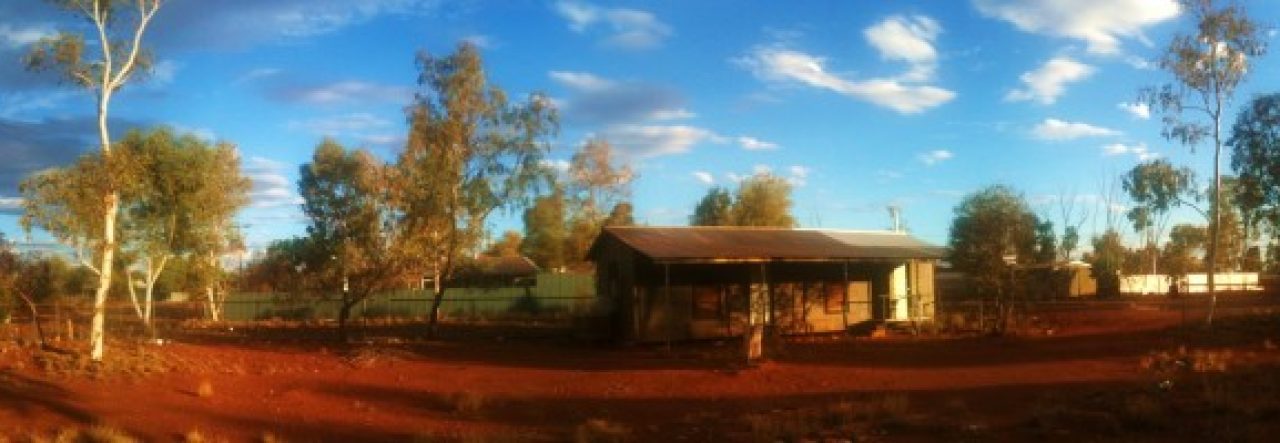
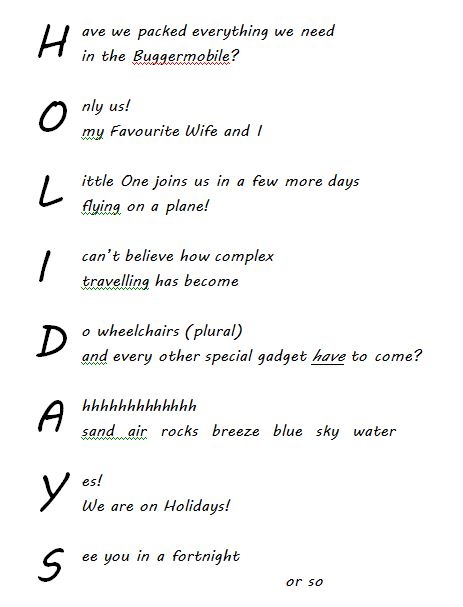
I dread holiday’s end. A day or two before we leave I begin to see each familiar sight with wistful, so-sad eyes. It’s a little pathetic, but I’ve never been able to muster the discipline to shun this annual round of self torment. Following the packing and the fond farewells comes The Drive, an exquisitely tortuous event that combines endless hours of contemplation with irrefutable evidence of the miles that separate holiday and home.  Unlike the drive toward a holiday destination, which is a delightful feast of anticipation, the drive home is a joyless musing of fading bliss. Inevitably, during this morbid marathon, my thoughts will arrive at the same unanswerable question: Why, oh why, do we live so far away? With each move over the years we have put more distance between ourselves and our family; and more miles between our home and the beach.

This miserable state of mind has played itself out countless times in the last few decades; and I should have long since conquered my fears. As a Boy Scout I felt the sharp stab of homesickness gnawing within as we trudged endlessly under overgrown rucksacks. And yet, at the very moment the homebound train disgorged its load of sweat-stained, smoke-infused boys at Central Station my emotion would swing to excited thoughts of another bush adventure in the weeks ahead. Some years later as at teenager I used to keep my gaze away from the moon at night, especially a big bright moon, because the knowledge that the same moon was shining in the window’s of my family home was too much to bear!

Much like my former Wolf Cub self (“dib dib dib, dob dob dob” – what on earth did that mean?) I am confident that my mood will improve within a day or so, three at most, and I will become attuned again to the routines of normal life. But for now the sting is sharp – and I have to deal with this irrational need to reverse the flow of time, striving to will myself back into last week’s time and place.  It’s a mindset too bizarre to sustain for long: but I find myself sometimes completely unwilling to admit that here is here and now is now; such is my longing for then!

At this strange time of year I often ponder a strong New Testament statement:

From one man He made every nation of men, that they should inhabit the whole earth; and He determined the times set for them and the exact places where they should live. Acts 17.

I look there for reassurance about our geographic isolation from family and friends.  A simple reading seems to offer exactly that: that our place and our time are divinely given, exactly determined.  Or is that too literal, too simple?  Is it only a description of the broader pattern of nations and eras through the span of history? In recent years we have moved by force of circumstance, and yet the choices we have made have been our own.   Is this family Diaspora God’s will, or my own?  It’s Double Agency: the thorny question of when and how an action can be ascribed to more than one agent.

The verse that follows next makes the outcome clear, even if the causes remain oblique:

God did this so that men would seek Him and perhaps reach out for Him and find Him, though He is not far from each one of us. ‘For in Him we live and move and have our being.’

Here there is a note of discomfort, of a pebble in the shoe that causes us to search for answers.  Scripture is so often the story of wanderers; people who are exiled, or sent, or called, or in other ways placed upon a strange path.  With that as our heritage, is it any wonder that we sometimes feel adrift, alone, misplaced?

There is an annual rhythm emerging in my writing; and the uncertainty of the year ahead is no doubt colouring my view.  If you think this is bleary, you should read A Donkey’s Take on Unemployment, last year’s back to reality blog.  Now that was sad!


Rejoice!

?Happy New Year!

Happiness would surely be the most common hope I express for everyone I know.  I say it all the time.  Happy Birthday, Happy Anniversary, Happy Travelling, Happy Christmas, have a Happy-rest-of-the-day, and on it goes.  And yet…   and yet…   happiness is not something in which I place much confidence at all.

?Happiness.  I’ve learned this particular spelling from our GP who puts a question mark before the disease that I may or may not have.  It’s rather a good way to describe a matter under suspicion, or something whose merits remain unproved.

?Happiness is quite real, of course. I’m quite happy reasonably often, and like most everyone else I love being ?happy. Light hearted confidence, smiling with friends and laughing at the world. ?Happiness is an addictive sensation.  Many things make me ?happy. My family make me ?happy – while ever they are ?happy of course. A bright sun and a cool breeze make me ?happy.  A friend’s success is quite likely to make me ?happy – so long as I am warmly disposed towards said friend.  Success of my own making is sure to make me ?happy.  Any word scoring more than 30 points in scrabble is going to do it for sure! Washing my own hands with soap and running water in my new accessible basin makes me extreeemely happy.  And here is the first of my several concerns for the legitimacy of ?happiness:  I can be ?happy without giving a thought to anyone else.

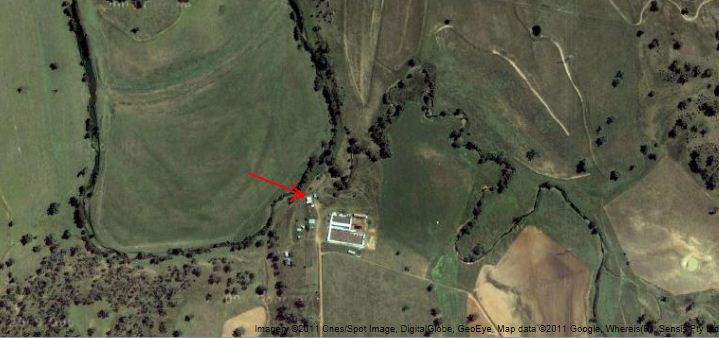
When my Favourite Wife and I were newlywed we took our family of five away from the town where we had met, and made our first home in the bush. We farmed chickens on the lonely bend of a creek, without a neighbour to be seen in any direction.  Our driveway was a couple of miles long, and then only met a dirt road. The farm cottage was ‘older’, I guess you could say.  We walked noticeably uphill from the kitchen (a cosy little room with a wood stove taking up half the space) to the living room with its worn floral carpet and open fire; and then down again into the couple of bedrooms behind.  We almost broke into a trot on the downhill side.  It was the sort of house where the wind would blow and the curtains billowed – even though the windows were all tightly shut. A glass of water on our bed-side table would sometimes freeze over during the night (absolute fact!).  And we were happy.  The creek – nearly a river at times – was only meters from the house, and many evenings after work and many weekend picnics were spent on its sandy banks and in its cool rock holes.  We were happy together, happy with our lot in life, we had little and we worked hard.

Home on a bend in the creek

That’s a romantic picture of ?happiness I guess – and there is another of the faults of this elusive gift.  ?happiness seems more tangible in memory or in anticipation than in experience.  This gives rise to many of our euphemisms’, such as ‘the good old days’ and, ‘the grass being greener’.  There is nothing wrong with happiness.  I think happiness is a good thing, probably, but whatever goodness it has is unlikely to be its own.

I did my carpenter’s apprenticeship under the watchful eyes of some old codgers from the bush.  Along with the rudiments of timber craft, they also passed on treasured folk-law, such as the true facts concerning Goanna Oil.  True goanna oil, as it happens, cannot be contained in a glass bottle.  Any goanna oil enclosed in such a glass bottle is only there by pretence: true goanna oil is far too thin and will run straight through.  (Which makes me wonder: did they ever tell me how you actually do keep goanna oil?….).  ?Happiness is just like that.  You can’t keep it, nothing will hold it for long, it’s precious and it’s rare.

To even notice that you are ?happy is to risk losing the moment forever.  Looking for ?happiness is more foolhardy still, an enterprise doomed from the outset.  Try and be ?happy and the most likely outcome is boredom.  ?Happiness is found along the way. ?Happiness is a by-product; it happens to you when your attention is given completely to something else.  It’s like the patch of cool air you pass through beside a stream or a wet rock face when trekking through the bush. It’s like the richness of conversation that arises when friends are working on a task together, completely absorbed in the job at hand.  It’s like the unexpected comfort of a hard concrete path when you take a break from long, hot toil with a pick and shovel.

To wish one another a “?Happy New Year” sounds to my grumpy old ears like hogwash.  Better, wiser, to wish one another a Loyal New Year.  Loyalty: now there is a path to happiness.  Concentration is another: nose down, push other thoughts aside and focus on the task; and soon enough ?happiness drops in to visit. But don’t forget: ?happiness is a shy commodity, it flees attention.

So I wish you a Loyal New Year, a Fruitful New Year, and a year attended with Concentration, Diligence, Perseverance and Faith.  I wish you a Prayerful New Year and a Challenging one too; a year of Need and Provision, of Questions and of Hope.  Eyes forward, hands to the plough, one step at a time; and who knows?  We might just be happy with that.

Rejoice!

The Blight Before Christmas

The Blight Before Christmas
       …and how they all showered happily ever after.

T’was the night before Christmas, when all through the house
Not a creature was stirring, not even a mouse.
Except builders, of course, for they were still there,
A’tapping and banging with mess everywhere.

The Little One nestled all snug in her bed,
While visions of bathrooms still filled Father’s head.
And Mother was fretting, “When will it be done?”
For she was past caring: renovation’s no fun!

When out on the lawn there arose such a clatter,
Father spun in his wheelchair to search out the matter.
Away to the window he rolled like a flash,
Tore open the shutters and threw up the sash.

The moon over Paradise was shining so bright
And the sight that he saw made him grin with delight!
When, what to his wondering eyes should appear,
But a painter in white, with his ladders and gear.

Up next: the Old Builder, so lively and quick,
Father thought for a moment: “This must be a trick!”
More rapid than eagles, apprentices came,
The Boss whistled and shouted, and called them by name!

“Now Painter! Now Plumber! Now Plasterer too!
“Get your backsides in here and do what you do!
“From the tiles on the floor to the paint on the wall,
“Now work away! Work away! Work away all!”

As dry leaves before the wild hurricane fly,
When they meet with an obstacle, mount to the sky.
So into their trades all the artisans flew,
With their hammers and spanners and paint brushes too.

And then, in a twinkling, high up on the roof
Old Builder was stomping – he’s never aloof.
Father drew in his head, and was turning around,
When down the Old Builder came with a bound!

He was dressed all in Khaki, from head to his shoe,
And his clothes were so dusty with sawdust and glue.
A bundle of tools he had flung on his back,
And he looked like a Boss should: the head of the pack.

His eyes-how they twinkled! His dimples how merry!
His cheeks were like roses, his nose like a cherry!
His droll little mouth was drawn up like a bow,
And the beard of his chin was as white as the snow.

But back in the house there was such a kafuffle
Something was different, and not just a trifle!
The Little One said, “Oh my gosh, what’s that odour?”
“No dear”, said the Mother, “That is an aroma!”

“There’s something or someone as clean as a whistle!
“Tis your father my dear, ‘neath the toe of the Mistle.
“Coliseum’s been finished, the bathroom is done!
“Your Father has showered, now let’s have some fun!”

He was shiny and clean, like his jolly old self,
And she laughed when she saw him, in spite of herself!
And a wink of his eye and a twist of his head,
Soon gave her to know she had nothing to dread.

He spoke not a word, but went straight to his Wife,
“My Favourite, it’s finished! The end of our strife!”
And laying his finger aside of his nose,
And giving a nod, from his wheelchair he rose!

He sprang to his feet, and his Wife gave a whistle,
And they danced round and round like the top of a thistle.
They were heard to exclaim, ‘ere they danced out of sight,
“Happy Christmas to all, and to all a good night!”


A Happy & Holy Christmas to you,
with my sincere thanks for reading your way through the year with me.
Your company is priceless.

Roderick.

A Handel on Life

Wallet – check.
Phone – check.
Jacket – check.
Tickets – check.
Walking sticks (necessary for the Hallelujah Chorus!) – check.
Little plastic card thingy to get back into our apartment – check.
Favourite Wife (essential) – check.

85 minutes before the conductor raises his baton and we are on our way to Handel’s Messiah after months of eager planning.  The Melbourne Recital Centre is about a mile’s walk, down several inner city blocks and across the river, but we have plenty of time. 

50 Minutes-Before-The-Conductor-Raises-His-Baton: Here we are! Abuzz with arriving patrons.

35 M-B-T-C-R-H-B: We present our tickets to an important looking usher, double checking that there won’t be any issues with Bugger (the power wheel chair). “All is well”, we are smilingly reassured, “We’ve never put a chair as big as yours on our lift,” (really?) “But all will be well!”  We order tea at the bar. Something slightly stronger for Favourite Wife, who is not so quick to be smilingly reassured.

25 M-B-T-C-R-H-B: we venture to the usher’s desk, and are promptly ushered to the lifts, and up to the first floor.  (First floor?  Must be right, but I had expected to be higher up with our Dress Circle tickets).

20 M-B-T-C-R-H-B:  The wheelchair lift that descends 8 steps is certainly on the small side.  It has ‘death-bars’ front and rear that swing rapidly up or down as buttons are pressed by our ushering usher. Designed for safety no doubt, the death-bars appear more likely to take a life than save one.  I need to quickly duck to avoid being sconed by the rear death-bar, and after several near misses I have to pull Bugger’s head rest away before the lift will move. 

16 M-B-T-C-R-H-B:  At the bottom of 8 steps our usher ushers us though a door, a door that leads into the stalls directly beneath the stage.  NO, NO!  Our tickets are for the front row in the Circle!  As I show the usher I remember how I booked these precious tickets.  It took two days of computer generated phone calls to find to the right person who could assure me that wheelchair access to the front row of the Circle was possible and permitted, days during which I could see the seats disappearing from the auditorium’s on-line booking plan.  I finally purchased the only remaining pair of seats in the dress circle, in the very front row.  A couple of days later the entire venue was sold out. 

13 M-B-T-C-R-H-B: Back up the 8 steps.  The swinging death-bars are even less obliging in reverse. Down they come as I duck obligingly, and up they go again with no movement of the lift.  Our obviously unnerved usher repeats this at least a dozen times, to no avail.

9 M-B-T-C-R-H-B:  The usher phones for back up; and I face a dilemma.  To fiddle with the controls while we wait, or not to fiddle?  Fiddle, obviously! I try the buttons.  I sneak a go with the remote control.  Down death bars / up death bars; but the platform will not ascend.

6 M-B-T-C-R-H-B: The uber-usher arrives with the upset-under-usher in an apologetic panic; more button pressing and death-bar dodging, but no progress! 

5 M-B-T-C-R-H-B: The Public Address Systems offers its last stern warning to Patrons to be seated; and I have a thought.  Bugger is squashed onto this little platform, and perhaps that is the problem: I edge slightly towards the swinging death-bar which seems to release pressure on a thingummy-gadget, and we are off and up!

3 M-B-T-C-R-H-B and we are back in the lift, heading to the second floor with our usher gushing regret.

2 M-B-T-C-R-H-B: At the door…..

1 M-B-T-C-R-H-B and we are in our seats, Bugger safely stowed a short distance away.  Phew.

Thus saith the Lord, the Lord of Hosts’
yet once a little while,
and I will shake the heav’ns and the earth,
the sea and the dry land.

The first baritone solo shook our innards!  We are unprepared for the astonishing voice of Teddy Tahu Rhodes, with his incredible power and pure tone.  Fabulous. 

For unto us a child is born,
unto us a son is given,
and the government shall be upon his shoulder;
and his name shall be called
Wonderful, Counsellor,
The Mighty God,
The Everlasting Father,
The Prince of Peace.

The precise, exhilarating power of the Melbourne Symphony Orchestra Chorus at full tilt!  Wonderful!  Mighty!  I’m sure I saw the timpanist smile at the conductor as he was brought in repeatedly to beat out this dramatic chorus.

Behold the Lamb of God,
that taketh away the sins of the world.

Pure, subtle gravity from the soloists.

And with his stripes we are healed

Isn’t this phrase one of the most oddly phrased in the whole oratorio?  The music is strange, it is enigmatic.  I wonder if Handel was wondering, as I do, what this finally means?

All we, like sheep, have gone astray,
we have turned ev’ry one to his own way;          

played at frenetic, even frivolous pace, and suddenly the conductor pulls hard on the reigns, the key shifts to the minor, the chorus sings this line only once, with dramatic solemnity:

And the Lord hath laid on Him
the iniquity of us all.    
        

and a sustained, searing silence fills the room. The most profound moment in Handle’s Messiah.

Hallelujah!
Hallelujah! Hallelujah! HALLELUJAH!
For the Lord God omnipotent reigneth,
Hallelujah!

We stand for the Hallelujah Chorus, as audiences have done by tradition for more than 250 years.  The Messiah is said to be the most performed piece of music in human history, and somehow this act of standing is significant to me: reflecting the countless generations of humanity who stand before God. The repeated words of church liturgy have a similar effect at times: subsuming the individual into the community of faith. I remember hapily that my Father, several of our friends and family and my Godmother are listening right now to the radio broadcast of the concert.

I know that my Redeemer liveth,
and the He shall stand at the latter day upon the earth.
And though worms destroy this body,
yet in my flesh shall I see God.

This soprano solo is unspeakably beautiful.  Crystal clear, so pure. 

The French Horn shall sound,
and we shall be raised incorruptible.

The French Horn? What was Mozart thinking?  I have been confidently predicting this moment to Favourite Wife as the highpoint of the concert: Trumpet and baritone soloists pared in thrilling drama.  It was not.  I’ve never heard Mozart’s version of Handle’s Messiah before, and I’m a little dashed.  

But thanks be unto God,
w
ho giveth us the victory
through our Lord Jesus Christ.

And all too soon the concert is ending.  There is no slowing or stopping to savour the moment.  Indeed since the conductor first raised his baton it has been inevitably so.  It’s a sobering sensation that I have felt often in a performance. Time waits for no man. The end is nigh.  A life lesson.

Amen.

At the bottom of the autograph edition of Handel’s score – 259 pages completed on September 14th, 1741, after just 24 days work – are the letters SDG, Soli Deo Gloria. ‘To God alone the glory’. 

Have you made it this far through my enormously long essay?  And yet it’s only a fraction of the superbly eventful weekend away my Favourite Wife and I have spent together.  Now we rattle homeward once more.

SDG!


O Come, Emmanuel

O come, O come, Emmanuel
And ransom captive Israel
That mourns in lonely exile here
Until the Son of God appear
Rejoice! Rejoice! Emmanuel
Shall come to thee, O Israel.

This is the first Carol I learned to sing from memory.  Others, such as Silent Night, Hark the Herald Angels Sing, or O Come all Ye Faithful, I picked up by repetition during many childhood years of wonderful, emotive candlelight services in our church.  But this ancient hymn I carefully learned some time in my late teen years.  It remains my favourite to this day; and yet it is rarely used.  The last time I heard it sung was a performance by a superb choir in the National Library.  Churches, mine included, have largely moved on to newer things.

O come, Thou Rod of Jesse, free
Thine own from Satan’s tyranny
From depths of Hell Thy people save
And give them victory o’er the grave.
Rejoice! Rejoice! Emmanuel
Shall come to thee, O Israel.

I’m suffering from Yuletide schizophrenia.  I find myself diving into the Christmas rituals with vigour: writing cards, buying gifts, planning the special days of celebration with family gathered round; and at the very same time my inner Scrooge protests acidly against the frivolity, the commercial pressure and the unthinking conformity of the world. 

“If there is a word to make me shiver with revulsion,”said English writer and actor Stephen Fry,
“It’s the word ‘fun’!”  He’s right, absolutely right!
Fun is great fun, but fun as a value is appalling. 

My favourite Christmas Carol is sung in a minor key; and I suspect that presents a challenge to the modern ear.  I encountered a rather zealous musician once (a young man with a guitar, piercing eyes and no personal space) who vehemently believed that Christians should never sing worship in minor keys.  The technicalities of the argument elude me now; but it went somewhere along the lines of the diminished third insulting the third person of the trinity – whereas the resolution of a major chord is indefatigable testimony to the coming of the Messiah.  This explained, my antagonist said, the preponderance of minor keys in Jewish music.  Complete nonsense!……… and yet……….  Where have the minor keys gone?  You won’t hear them in Coles or Woollies this Christmas; or at Sydney’s Carols in the Domain I’ll wager; and quite possibly not in your church either. Even when bullied for his bright red nose, Rudolf never sang a lament.

O come, Thou Day-Spring, come and cheer
Our spirits by Thine advent here
Disperse the gloomy clouds of night
And death’s dark shadows put to flight.
Rejoice! Rejoice! Emmanuel
Shall come to thee, O Israel.

Yesterday  a friend died of the disease I was once thought to have.  She is, I think, now seeing those things which we so dimly glimpse; and perhaps for her Christmas has truly come at last.  I had never met this friend in person; indeed during the 18 months  I knew her she almost never left her home.  And yet her voice touched scores of lives around the world with the assured hope that the Saviour will meet our need.

What I mean, brothers and sisters, is that the time is short. From now on those who have wives should live as if they do not; those who mourn, as if they did not; those who are happy, as if they were not; those who buy something, as if it were not theirs to keep; those who use the things of the world, as if not engrossed in them. For this world in its present form is passing away.  (1 Corinthians  7)

Step back a little, slow down.  Cultivate some distance from the world around, and acknowledge that there is more going on inside our souls than outside.  Why can’t we yearn to be rescued?  Why pretend that it’s “all good” when it often plainly isn’t?  What’s wrong with waiting for the Messiah to come for us? 

O come, Thou Key of David, come
And open wide our heavenly home
Make safe the way that leads on high
And close the path to misery.

Rejoice! Rejoice! Emmanuel
Shall come to thee, O Israel.

O come, O come, Thou Lord of Might
Who to Thy tribes on Sinai’s height
In ancient times didst give the law
In cloud, and majesty, and awe.

Rejoice! Rejoice! Emmanuel
Shall come to thee, O Israel.

Rejoice!

_____________________________________________________________________________________


O come, O come, Emmanuel is a translation of the Latin text “Veni, veni, Emmanuel”  in the mid-19th century. It is a metrical version of a collation of various Advent Antiphons, which now serves as a popular Advent hymn. Its origins are unclear, it is thought that the antiphons are from at least the 8th Century, but “Veni, veni Emmanuel” may well be 12th Century in origin.The text is based on the biblical prophecy from Isaiah 7:14 that states that God will give Israel a sign that will be called Immanuel (Lit.: God with us). Matthew 1:23 states fulfillment of this prophecy in the birth of Jesus of Nazareth.

It is believed that the traditional music stems from a 15th Century French processional for Franciscan nuns, but it may also have 8th Century Gregorian origins. It is one of the most solemn Advent hymns.  (edited, from Wikipedia). 

There are several versions on YouTube, here is one.


A Window on Heaven

Church was so much better today!  Or was it just me?  Having taken my first weekend-shower in six months I know for a fact that I was certainly better!   (I should explain: without a seperate bathroom, and a seperate entrance to the house, weekend showers have been on hold.  A long, long wait!)  If cleanliness is next to godliness then The Coliseum is a temple, and I have been ordained. I might be exaggerating slightly, but there is no exaggerating the joy of finally washing your hands with soapy water in a hand basin; and absolutely no exaggerating the relief of leaving behind the clammy horrors of baby wipes and pump-bottle hand sanitizer.

At one end of The Coliseum stands a door, beyond the door lies a room, the end of the room holds a window, and through the window streams heaven.

Through the open window comes buoyant air from eucalypt and wattle; myriad clicks and whistles from the teeming small life of the valley stretching back; the occasional thump of a kangaroo on the move; the delicious echo of magpie and kookaburra; and sometimes my favourite sound of all: the roar of wind through the gumtrees on the ridge high above Paradise.  It’s all too much, all too good!

Contentment – that Holy Grail of the material age – has become not only imminent, but seductive.  When I sit beside the open window, as I am doing right now, I feel that heaven has come too soon!  The breeze is perfection, the bush colours spectacular against a spring-blue sky.  And my hands are clean. Washed hands: you can’t possibly imagine how exciting that is! I’m rubbing them together in glee.

The Coliseum is our all-but-complete accessible bathroom; painstakingly designed to accommodate Bugger and I.  Pristine white walls, gleaming with elegant two-foot wide tiles carefully chosen by my Favourite Wife, are marred by a great slash of stainless steel grab rails; a very permanent reminder of the sobering truth behind our building programme.  The loo is perched atop an odd little raised dais which makes it eminently suitable (nice adjective for a throne!) for my height, but absurdly tall for our Little One (truth be told she can’t get down without help!  Its the funniest thing). The room beyond The Coliseum, ‘My Room’, is a dressing room and a sanctum of peace in which to escape the busy household now and then.  It too will have its rather obvious features: a sink and bench at wheelchair height and goofy big-button light switches placed within reach, all designed to accommodate the demands of immobility.

Yet, in the midst of challenge I have found this beauty, this temple of rest, a haven of solitude and contentment.

But contentment has an underbelly.  Contentment discovered within adversity has a certain nobility; but contentment as a goal is self indulgent.  The dark sides of contentment are avoidance, intoxication, and hedonistic withdrawal. My Room is a dangerous place, and I am wary of my attachment to its comforts.  I am reminded of Jonah, a Biblical character I have mentioned more than once*.  Having escaped the belly of a whale he eventually followed the path of his calling, but failed completely to shrug of his necrotic self interest:

Jonah had gone out and sat down at a place east of the city. There he made himself a shelter, sat in its shade and waited to see what would happen to the city. Then the Lord God provided a leafy plant and made it grow up over Jonah to give shade for his head to ease his discomfort, and Jonah was VERY HAPPY about the plant. But at dawn the next day God provided a worm, which chewed the plant so that it withered. When the sun rose, God provided a scorching east wind, and the sun blazed on Jonah’s head so that he grew faint. He wanted to die, and said, “It would be better for me to die than to live.”

A great challenge of disability is that it takes enormous concentration on one’s own needs and solutions to get anywhere.  I spend the greater part of every day thinking about little old me.  How then, do I avoid the trap of self absorption in the glorious and increasingly commodious surrounds of Paradise?

While not holding  the sway over life and death of the Roman Coliseum , my new rooms do have a sense of gravity about them. It sounds dramatic I know, eccentric even, but I feel the need to use them well.  I must achieve productive contentment.  “For everyone to whom much is given, of him shall much be required.”  I think it’s time to work again, to write a book. Perhaps it’s a calling. In fact, I shall start right now, right here beside heaven’s window.


Rejoice!

_________________________________________________________________

*      Me Me, I Mine, My My        Locomotion


I ♥ My Church

We didn’t go to church today, which for us is rare.  I remember another distant day when our van filled with our young children got hopelessly bogged between farm cottage and front gate.  Forced to abandon our plans we had great fun at home that day, but there was a thwarted, sad feel to the day as well.  I feel like that right now.   Unless we are away, we go to church.  It’s a life habit, among the best we have.

Church is the highest and the lowest point in my normal week.  Without a doubt church is the week’s highlight: to meet friends, to join in the loud, vibrant worship, to pray and to listen; it’s very good indeed.  Just as surely, though, it is the loneliest moment of the week.  Nowhere else am I so confronted with the full gamut of loss that has occurred in the last few years.  The songs I don’t sing, instruments I don’t play, the standing I don’t join in, the conversations I don’t have, and perhaps worst of all the roles I no longer fill. The excited buzz of week-end chat cocoons me in a silken cave of dark silence at times.  It’s tough turning up for that.  It would be so easy not to bother; and I understand why people who don’t fit the mould sometimes vanish from our midst.

We didn’t go to church today because I went yesterday – all day – and I am spent!  The toll of our church’s Annual Conference (a key date, not to be missed) was physical, emotional and even spiritual.  The day began uneasily at home with a reading for the day coming from the ancient history of Solomon’s Temple.  “I have taken great pains”, Kind David wrote, “to provide for the temple of the Lord a hundred thousand talents of gold, a million talents of silver, quantities of bronze and iron too great to be weighed”.  In very rough figuring the value of these metals would exceed 600 billion dollars today; a figure too enormous to be grasped, and so unlikely as to make me wonder (not for the first time) how such passages of scripture should be read.  I am not afraid of these niggling problems with our Holy Book, although in the past I have been more circumspect in discussing them openly.  It was not a comforting start to a day that would grow more literal, perhaps even fanatical, as the hours passed. In the first break an unknown man barreled up and asked me without introduction,

“Do you have faith to be healed?”

I dread this conversation, it never ends well.  In the din of a room full of talk I could not make myself heard and tried instead to sign to this fellow that I had no voice; but in the way of such people he seemed somewhat slow on the uptake.  He had an agenda that allowed little sensitivity. Finally he got the picture, and helpfully reissued his challenge:

“That doesn’t matter, just nod!  It’s a simple question, Do you believe?”

It was clearly time for my computer to be come out.

‘You would have to sit where I sit’, I typed, ‘to know that it’s not that simple at all’.

But for him there was only one possible outcome for people in wheelchairs, and on he ploughed.

‘Friend’, I typed (odd how that word get’s used!), ‘I think we will leave it there’.

I closed the lid of my computer, a little emphatically, and thankfully he got the point and wandered off; presumably to torment some other victim with his thin brand of faith.

I do believe that God heals, and He provides, and He helps daily, and I’ve written about  that once or twice*.  But the longer I live, and the more I read, the less convinced I am that that’s all He does.  As my good friend likes to say, ‘eventually we need a more nuanced faith’.

Much of the day’s teaching I enjoyed: “Whoever taught you that you can live without prayer?” asked one speaker.  But some I found frustratingly narrow.  The urgent problem of unanswered prayer was answered much too simply.  A sharp line was drawn between injury – which is acceptable for a Christian – and disease – which is not.  With enough of the right sort of prayer anything can go our way.  For me it was all a little too cut and dried.

One of the presenters eventually prayed for me, at the urging of a friend I think. I liked the way he spoke onstage, and I liked the way he prayed as well.  But…..  I am a husband, a father, a grandfather, a writer, a person with responsibilities, with opportunities and a full life of my own.  And maybe I also have a wheelchair and a few medical issues.  But they are at the bottom of my list, so why must they go at the top of his?  This simplistic reduction irks me, but of course there was no chance to explain or engage in the conversation I would have liked.

I love our church, and I believe. I am less sure exactly what I believe than I once was, but I do believe.

I believe in God, the Father almighty, maker of heaven and earth: and in Jesus Christ, his only Son our Lord, who was conceived by the Holy Ghost, born of the virgin Mary, suffered under Pontius Pilate, was crucified, dead and buried. He descended into hell; the third day he rose again from the dead; he ascended into heaven, and sitteth on the right hand of God the Father almighty; from thence he will come to judge the quick and the dead. I believe in the Holy Ghost, the holy catholic Church, the communion of saints, the forgiveness of sins, the resurrection of the body, and the life everlasting. Amen.

As I learn the language of silence (having spent so many years employed in speech) I find that I need fewer answers than I once did. My silence seems to be in some way an echo of God’s own quiet voice.  The bible is an enormous book, and yet there is so much it leaves unsaid.  So many mysteries, so much trust, so much faith.

Rejoice!

__________________________________________________________________

*The God who Heals

*Why I (almost) didn’t attend the Healing Crusade

Feet of Clay

Scarcely a week passes without someone saying, “Oh, I’ve been reading your blog”. No matter who says this – a close friend, a family member, or perhaps a complete stranger – it still comes with something of a jolt.  Although I know it’s extremely public, available to a huge slice of human kind, my blog is primarily a personal journal; with it’s very public nature being fundamentally a method of clarifying my own thinking. I am using you, my reader, to distil my thoughts. Like “iron sharpenning iron”, the knowledge that you are reading my thoughts compels me to think more deeply and strive for more honesty than I might otherwise achieve.  Some readers have commented that they feel like voyeurs, and I sometimes wonder what forces me to cross lines of propriety and make so public some aspects of my private world.  Perhaps I should have posed that question to the bevy of psychiatric specialists I recently met.  Or perhaps not…

Well, this week, as a special treat, and on the last day of my youth, I will be taking personal disclosure to an entirely new level!  

“Oh dear,”
said Bertha,
“that doesn’t look good.”                               

‘Bertha’ is the collective name my Favourite Wife and I have assigned to my harem of personal attendants, the bevy of middle aged nurses who will soon be flocking to The Coliseum.

One never likes to be told that there is something wrong with one; and when one is at the unenviable disadvantage of being showered one tends to panic all the more.  My toes were the focus of Bertha’s attention, and she pointed out to me with professional concern a nasty patch of flaky skin between digits 7 & 8.  I reflexively crunched my toes tightly together against further scrutiny.  Later in the day, having achieved the privacy of solitude (in contrast to the utter lack of privacy at shower time) I made my own inspection and to my enduring horror discovered that digits 1 through 6 along with numbers 9 and 10 were equally compromised!  I had a case of full blown, galloping tinea. (Get it? Hooves? Feet?  No problems with the top end!)  Beware reader, lest you ever have to delegate your own foot washing!

In the days since I have cowered in embarrassment through each and every shower, purely on account of my toes.  Which is rather bizarre if you think it through.

This unpleasant turn of events only adds insult to injury, because it is not the first podiatric complaint of the year.  Sitting down as much as I do allows gravity to do dreadful things to the fluid in one’s legs; and by evening my formerly statuesque feet have more of the look of a balloon dog inflated by a children’s-party clown.  I detest the annihilation of my lean, athletic extremities; an aspect of my physique in which I once took enormous pride!

I find this dilapidation excruciating.  It’s a horrible thing to be confronted with the end of vigour; the shattering of the illusion of youth which I’ve been able to sustain for the better part of my half century*.  I think, however, that I have long been aware of the pride involved in my carefully manicured sense of invincibility.  When I was discharging my duties as a pastor, or even as a hospital chaplain for a time, I was always secretly glad that I was not ‘one of them’, no matter how genuine my concern for someone in need.  Physically, intellectually, emotionally, socially, ethnically, spiritually, financially, culturally, aesthetically; I was always on the right side of the line. And that, surely, is an uglier thing than athlete’s foot.

This was the temptation that Eve succumbed to: “In the day ye eat thereof, then your eyes shall be opened, and ye shall be as gods, knowing both good and evil.” Not merely having the feet of an Adonis, but critiquing all things, knowing good from evil, deciding which is which, and whom is whom, sitting in judgement upon the whole world.  And it can only be so long until you find in yourself the very thing you found so insufferable in another.

Well, it seems I’ve reached my word limit!  I was planning to explain a redemptive story about tinea from the second chapter of Daniel; but instead you will just have to figure it out for yourself…

The head of the statue was made of pure gold, its chest and arms of silver, its belly and thighs of bronze, its legs of iron, its feet partly of iron and partly of baked clay. While you were watching, a rock was cut out, but not by human hands. It struck the statue on its feet of iron and clay and smashed them. Then the iron, the clay, the bronze, the silver and the gold were all broken to pieces and became like chaff on a threshing floor in the summer. The wind swept them away without leaving a trace. But the rock that struck the statue became a huge mountain and filled the whole earth.

Rejoice!

__________________________________________________________________

*Technically: forty nine and three hundred and sixty-four three hundred and sixty-fifths.